
Do You Need a Whole-Home Dehumidifier in Fayetteville's Humidity?
Your thermostat says 72°F. The air conditioner has been running for hours. Yet your home still feels sticky, your sheets feel slightly damp at night, and there’s a lingering musty smell in certain rooms. If that sounds familiar, you’re not alone.
Many homeowners assume lowering the thermostat will solve the problem, but indoor comfort isn’t just about temperature. While your air conditioner removes some moisture from the air, it isn’t designed to control humidity throughout your home. In Fayetteville, where high humidity is common for much of the year, excess indoor moisture can leave your home feeling uncomfortable and contribute to musty odors, poor indoor air quality, and even mold growth.
In this blog, you’ll learn the signs that your home may need a whole-home dehumidifier, how these systems work, and whether installing one is the right solution for your Fayetteville home.
Key Takeaways
- The EPA recommends keeping indoor humidity below 60 percent, ideally between 30 and 50.
- Your AC cools the air but often cannot remove enough moisture on its own.
- Musty odors, clammy air, and mold are signs of a humidity problem, not temperature.
- A whole-home dehumidifier ties into your ductwork and treats the entire house automatically.
- Portable units handle one room; whole-home systems fit Fayetteville’s long, muggy summers better.
Why Your House Feels Sticky Even When the AC Is Running
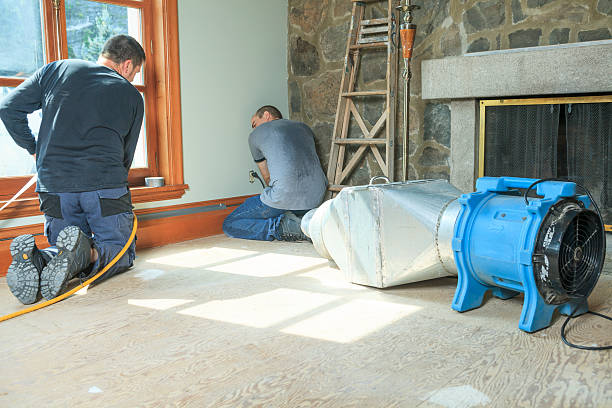
Cooling and drying are two different jobs, and your AC is much better at one than the other. An air conditioner lowers temperature and pulls out some moisture as a side effect, but only while it’s actively running long enough for its coil to condense water out of the air.
The trouble is that a lot of homes cool faster than they dry. If your system is on the larger side, it hits the thermostat setting quickly and shuts off before it has removed much humidity. You get cold, damp air instead of cool, dry air. In a place like Fayetteville, where summer afternoons routinely sit near 90 degrees with heavy mugginess, that gap between cooling and drying is exactly where comfort disappears.
Humidity also changes how warm you feel. Damp air makes 72 degrees feel like 78, which pushes people to crank the thermostat lower and run up the power bill chasing a comfort they can’t quite reach. The real fix isn’t colder air. It’s drier air.
What Is the Ideal Indoor Humidity Level?
The target is simple: keep indoor relative humidity below 60 percent, and ideally between 30 and 50 percent. That range comes straight from the U.S. Environmental Protection Agency, which flags 60 percent as the line where problems start.
Why does that line matter so much? Because moisture is what mold and pests feed on. Most molds thrive when relative humidity climbs above 60 percent, and dust mites, a common indoor allergy trigger, flourish at levels around 70 percent and higher, according to allergy and indoor air resources. Keep the air below 60 percent and you make your home a much less friendly place for both.
A cheap hygrometer from any hardware store will tell you where you stand. Set it on a shelf, let it read for a day, and check it during the muggiest part of the afternoon. If you’re regularly seeing 60 percent or higher indoors, your home is telling you something.
Signs You Have a Humidity Problem in Your Fayetteville Home
High indoor humidity leaves fingerprints all over a house, and most of them are easy to spot once you know what you’re looking at. Watch for these:
- Musty or mildew odors, especially in closets, bathrooms, or near HVAC vents
- Air that feels clammy or heavy even when the thermostat says it should be comfortable
- Visible mold or mildew on walls, ceilings, grout, or window frames
- Condensation or fogging on windows and around vents
- Warping or buckling in wood floors, doors that stick, or peeling paint
- Worsening allergy or asthma symptoms indoors, often from mold and dust mites
One of these on its own might have another cause. Several of them together point to a moisture load your cooling system isn’t keeping up with. Left alone, that moisture does real damage, feeding mold growth and slowly warping the materials your home is built from.
Whole-Home vs Portable Dehumidifier: Which One Do You Need?
Both remove moisture, but they solve very different sizes of problem. A portable unit dries one room. A whole-home system dries the entire house through your existing ductwork. Here’s how they compare:
Factor | Portable Dehumidifier | Whole-Home Dehumidifier |
Coverage | One room or small area | Entire house |
Setup | Plug in, place on floor | Integrated into HVAC ductwork |
Water removal | Empty the tank manually | Drains automatically |
Capacity | Limited | High, sized to the home |
Noise | Runs in your living space | Installed out of the way |
Best for | A single damp room or closet | Whole-house humidity in a humid climate |
If your only issue is a clammy basement or one stuffy room, a portable unit is probably enough and costs less upfront. The catch is that portables only treat the air right around them, you have to empty the tank, and they add noise and heat to the room they sit in.
For a whole house fighting humidity all summer, a portable is a bandage. Fayetteville’s long, muggy cooling season is exactly the situation whole-home systems are built for, because they treat every room quietly and automatically.
How a Whole-Home Dehumidifier Works With Your HVAC
A whole-home dehumidifier connects directly to your ductwork and works alongside your air conditioner instead of competing with it. It pulls air from the home, strips out the moisture, drains that water away automatically through a dedicated line, and returns drier air to the house.
The important part is timing. Because it runs independently of the cooling cycle, it can remove humidity even when the AC isn’t actively cooling, including on those mild, rainy stretches when the air is soupy but not especially hot. Your AC handles temperature. The dehumidifier handles moisture. Together they hold your home in that comfortable, healthy sub-60-percent range without overcooling.
There’s a comfort and efficiency payoff too. When indoor air is properly dried, you feel cooler at a higher thermostat setting, so the AC doesn’t have to work as hard. A professionally installed whole-home dehumidifier is sized to the house and integrated correctly, which is what separates a system that quietly solves the problem from an add-on that underperforms.
Is a Whole-Home Dehumidifier Worth It in North Carolina?
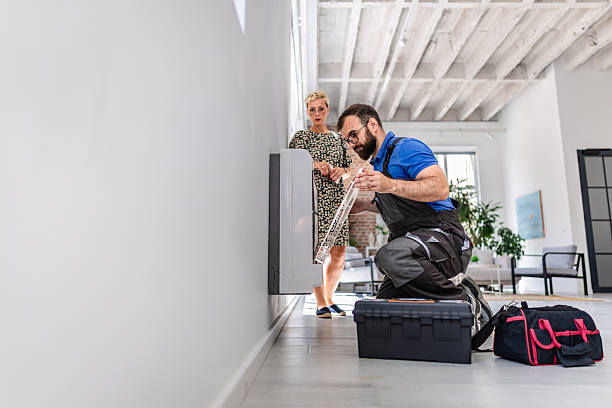
For many Fayetteville homes, yes, and the value shows up in three places: comfort, health, and protecting the house itself. If you’ve been fighting sticky air, musty smells, or mold despite a working AC, a dehumidifier addresses the root cause rather than masking the symptom.
Comfort is the most immediate return. Drier air feels cooler, so you stay comfortable at a higher thermostat setting and the AC cycles less. Health is the second. Holding humidity below 60 percent discourages the mold and dust mites that aggravate allergies and asthma. The third is your home. Excess moisture warps floors, swells doors, and can lead to costly mold remediation, so controlling it is cheaper than repairing the damage later.
A whole-home dehumidifier is a bigger upfront investment than a portable, no question. But for a home that struggles with humidity across every room, season after season, it’s usually the option that actually fixes the problem instead of chasing it one room at a time.
How to Know If Your Fayetteville Home Needs a Dehumidifier
The honest answer is that it depends on your specific home, and that’s exactly why guessing is the wrong move. Two houses on the same street can have very different moisture loads depending on insulation, ductwork, AC sizing, and how the home breathes. A hygrometer reading above 60 percent tells you there’s a problem. It doesn’t tell you whether the fix is a dehumidifier, a better-matched AC, a ductwork correction, or some combination.
That’s where a professional assessment earns its keep. A/C Man Heating and Air is a veteran-owned, licensed and insured local team with nearly two decades of experience and 800+ verified 5-star reviews across Fayetteville and the surrounding communities.
Our technicians measure your actual humidity levels, inspect how your HVAC system is handling moisture, and give you an honest recommendation with no pressure to buy equipment you don’t need. If your home feels muggy no matter how low you set the thermostat, talk to our AC technicians about a tune-up to make sure your system is operating properly, or schedule an indoor humidity evaluation or call us at (910) 797-4287 to find out whether a whole-home dehumidifier is the right solution.
FAQ
What humidity level should I keep my house at in the summer?
Aim to keep indoor relative humidity below 60 percent, and ideally between 30 and 50 percent, which is the range the EPA recommends for comfort and mold prevention. In a humid climate like Fayetteville, staying under 60 percent usually requires help beyond the air conditioner alone, especially during long, muggy stretches.
Will a whole-home dehumidifier lower my energy bills?
It can, indirectly. Drier air feels cooler, so you can raise the thermostat a few degrees and stay just as comfortable, which lets the AC cycle less and use less energy. The dehumidifier itself uses power to run, but many homeowners find the improved comfort and reduced AC runtime a worthwhile trade in a humid climate.
Can’t my air conditioner remove humidity on its own?
Your AC removes some moisture while it runs, but it’s built to control temperature, not humidity. Systems that cool quickly often shut off before drying the air, leaving your home cold and clammy. A dedicated dehumidifier removes moisture independently, including on mild, damp days when the AC barely runs.
Whole-home or portable dehumidifier, which is better for my home?
A portable unit is fine for a single damp room or closet and costs less upfront. A whole-home dehumidifier treats every room through your ductwork, drains automatically, and runs quietly out of the way. For a whole house battling humidity all summer, the whole-home system is the more complete fix.
Do you install whole-home dehumidifiers near me in Fayetteville?
Yes, A/C Man Heating and Air installs and services whole-home dehumidifiers for homeowners throughout Fayetteville and the surrounding communities. Our technicians assess your humidity levels and HVAC setup, then size and integrate the right system for your home. Call (910) 797-4287 to schedule an indoor humidity evaluation.
