
Is an HVAC Maintenance Plan Worth It in Fayetteville, NC?
Fayetteville heat can push an air conditioner to run for hours without bringing the house to the desired temperature. The thermostat says 74, the indoor temperature feels closer to 80, and the outdoor unit has been running since breakfast. You call for a repair, and the first question you hear is, “When was your last tune-up?”
That question sums up the whole debate. An HVAC maintenance plan is worth it for most Fayetteville homeowners, but not for the reason most people think. The real value isn’t a discount on a tune-up. It’s what twice-a-year attention does to a system that works harder here than it would in most of the country.
This guide breaks down what a plan actually costs, what it covers, the math behind it, and the specific situations where you’re better off skipping one.
Key Takeaways
- An HVAC maintenance plan is usually worth it in Fayetteville because our long, humid cooling season and freezing winter nights put heavy, year-round strain on heat pumps, air conditioners, and furnaces.
- Most plans bundle two seasonal tune-ups with perks like priority scheduling and repair discounts, and they typically cost about the same as, or less than, booking two standalone visits.
- The biggest savings come from catching small failures early (capacitors, clogged drain lines, dirty coils, weak refrigerant charge) before they turn into a no-cool call in August.
- A plan makes less sense if your system is brand new and covered by an installer’s labor warranty, if you’re moving within a few months, or if you rent and your landlord handles service.
- Routine maintenance doesn’t require a permit in Fayetteville, but any work involving refrigerant must be done by an EPA-certified technician, and your contractor should hold a valid North Carolina heating license.
- Read the fine print: a good plan spells out exactly what’s tested and cleaned, how fast you get service, and whether discounts apply to parts, labor, or both.
What an HVAC Maintenance Plan Actually Is
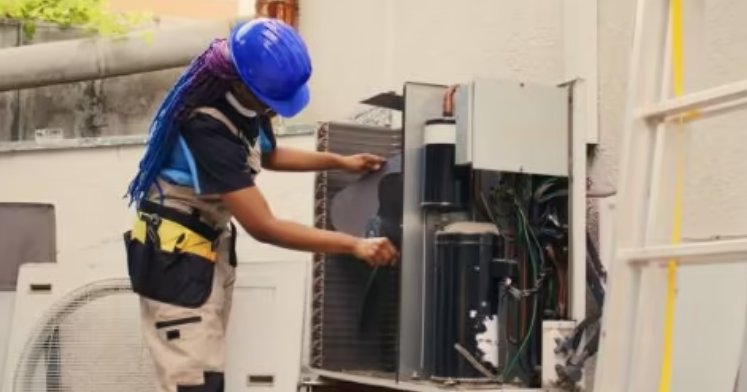
An HVAC maintenance plan is a service agreement with a local heating and cooling company. You pay a monthly or yearly fee, and the company schedules your seasonal tune-ups and adds member benefits on top.
The core of almost every plan is two visits a year. One happens in spring, before cooling season. The other happens in fall, before you need heat.
That schedule isn’t a sales invention. ENERGY STAR recommends annual pre-season check-ups, with the cooling system checked in spring and the heating system checked in fall, because contractors get busy once the weather turns. You can read the full list of what a proper check-up should include on the ENERGY STAR maintenance checklist.
Beyond the visits, plans usually add a few extras:
- Priority scheduling when demand spikes
- Repair discounts on parts, labor, or both
- Waived or reduced fees for after-hours calls
- Credits toward future equipment
A plan is not a home warranty. A warranty pays for covered repairs after something breaks. A maintenance plan is designed to keep things from breaking in the first place. Mixing the two up leads to disappointment when a plan doesn’t cover a $1,200 compressor job.
Why Fayetteville Systems Need More Attention Than Most
Climate is the biggest reason the answer leans “yes” here. Fayetteville sits in a humid subtropical zone, and NOAA records show typical July highs around 90°F with overnight lows that rarely drop much below 70°F. Your air conditioner doesn’t get a break at night the way it would in a drier climate.
Humidity adds a second layer of work. Your system isn’t only cooling the air. It’s pulling moisture out of it, which sends gallons of condensate through the drain line every summer day. In our climate, that line is a magnet for algae and sludge. When it clogs, you get water damage, a tripped safety switch, or a system that shuts off in the middle of a heat wave.
Then winter shows up. Cumberland County nights regularly dip toward freezing, and that’s when heat pumps have to run defrost cycles to keep the outdoor coil clear of ice. A heat pump that cools hard all summer and heats all winter has almost no off-season. Gas furnaces sit idle for months, then get fired up cold in November, which is exactly when a cracked heat exchanger or a dirty flame sensor reveals itself.
Local housing adds its own quirks:
- Crawl spaces. Many Fayetteville homes have vented crawl spaces where ductwork and air handlers live in damp air. Moisture speeds up corrosion and invites mold on coils.
- Spring pollen. The yellow coating that settles on every car in the Sandhills each spring also settles on condenser coils and quickly clogs filters.
- Storm season. Summer thunderstorms bring power surges and debris that knock out capacitors and contactors, two of the most common no-cool failures.
A Fayetteville system racks up more run hours than the same unit in a milder market, and maintenance is built to manage run hours.
What Happens When You Skip Maintenance
Skipping maintenance rarely causes an instant breakdown. It causes a slow slide, and each problem below is cheap to catch at a tune-up but expensive during a weekend emergency call.
The U.S. Department of Energy notes that an air conditioner’s filters, coils, and fins need regular maintenance, and that neglect leads to declining performance alongside rising energy use. You can see the DOE’s breakdown of air conditioner maintenance for the specific components that suffer first.
Dirty coils. Dust and pollen insulate the coils, so the system runs longer to move the same heat. ENERGY STAR notes that dirty coils increase energy costs and shorten equipment life.
Airflow problems. Dirty blower wheels and clogged filters choke airflow. ENERGY STAR estimates that airflow problems can cut a system’s efficiency by up to 15 percent.
Wrong refrigerant charge. Too much or too little refrigerant makes the system less efficient and harder on the compressor, which is the most expensive part of the outdoor unit.
Loose electrical connections. Heat cycles loosen terminals over time. Loose connections cause unsafe operation and burn out motors and components early.
Weak capacitors. A capacitor that tests low in April often fails outright in July. It’s a small part, but a failure means no cooling until someone replaces it.
What a Plan Costs Compared to Paying as You Go
This is where most homeowners want straight numbers, so let’s run them.
At A/C Man Heating and Air, our Precision Tune-Up Plan runs $24 a month, or $249 a year. That covers two tune-ups per year (spring cooling and fall heating), 10 percent off all repairs while you’re on the plan, priority scheduling, and $100 a year toward a new system that stacks up to $1,000.
Now compare that with paying per visit. Standalone tune-ups in our market generally range from $85 to $170 per visit, depending on the system type and how much cleaning it needs. We break those variables down in our guide to HVAC tune-up cost factors. Two visits a year typically cost $170 to $340.
Here’s how a plan compares across a few realistic years:
Scenario | Pay-As-You-Go | On a Plan |
Two tune-ups, no repairs | About $170 to $340 | $249 |
Two tune-ups, plus a $600 repair | About $770 to $940 | $249 + $540 = $789 |
Two tune-ups, plus a $1,500 repair | About $1,670 to $1,840 | $249 + $1,350 = $1,599 |
In a quiet year, the plan roughly breaks even with booking visits on your own. In a year with a repair, it starts to pull ahead. And every year you stay on it, you add $100 toward the day you replace the system.
The table also leaves out the savings that are harder to put on a receipt. A clean, correctly charged system uses less electricity, whether your power comes from Fayetteville PWC or Duke Energy Progress. A repair caught during a spring visit costs less than the same repair at emergency rates. And a compressor that never overheats is a compressor you don’t replace.
The Real Value Is in What You Avoid
The best argument for a maintenance plan isn’t the tune-up price. It’s the breakdown that never happens.
Think about how failures actually unfold. A drain line starts to slow in May. By July it backs up and floods the secondary pan, or worse, the ceiling. A tune-up flushes that line in April and the problem never exists.
Or take a capacitor that’s drifting out of spec. A technician with a meter catches it in five minutes during a spring visit. Without that check, it fails on the hottest day of the year, when every HVAC company in town is booked solid and you’re waiting with the windows open.
That’s also why priority scheduling matters more in Fayetteville than it sounds. During a summer heat wave, service calls stack up fast. Being near the front of the line is worth a lot when the indoor temperature is climbing past 85 and you have kids, older relatives, or pets in the house.
There’s a lifespan argument too. Most HVAC equipment is built to last well over a decade with proper care. Systems that run dirty and low on charge wear out sooner, and in our climate, sooner can mean replacing a heat pump a few years early. Spread across the life of the system, two tune-ups a year are a small price for those extra years.
When an HVAC Maintenance Plan Isn’t Worth It
A plan isn’t right for everyone. Honest advice means telling you when to pass.
Your system was just installed. Brand new equipment often comes with an installer’s labor warranty and may include a first-year check-up. In that window, a plan may overlap with coverage you already have. Ask your installer what’s included before you sign up for anything extra.
You’re moving soon. Fayetteville has many military families, and PCS orders don’t wait for your maintenance schedule. If you’re leaving within a few months, one standalone tune-up before you list the house may serve you better than a yearly plan.
You rent. Most leases make the landlord responsible for HVAC service. Check yours before paying for maintenance on equipment you don’t own.
Your system is near the end of its life. If a 17-year-old system is already struggling, a plan won’t turn back the clock. The main conversation should be about what comes next.
The plan is vague. If a company can’t tell you exactly what it tests, cleans, and measures during each visit, it’s not a plan. It’s a subscription to a quick glance.
How to Judge Any HVAC Maintenance Plan in Fayetteville
Before you sign any plan, check these points.
A written checklist. A solid plan lists every task. Look for coil cleaning, capacitor testing, amp draw readings on the compressor and condenser fan, refrigerant checks, drain line and pan inspection, electrical tightening, and, for gas furnaces, heat exchanger and burner inspection.
Two visits, not one. In a climate that works both your cooling and heating hard, one annual visit leaves half your system unchecked for a full season.
Clear discount terms. Find out whether the repair discount covers parts, labor, or both, and whether it applies to after-hours calls.
Proper credentials. Any technician who handles refrigerant must hold EPA Section 608 certification. The contractor should also hold an active heating license from the North Carolina State Board of Examiners of Plumbing, Heating and Fire Sprinkler Contractors. You can verify a license number on the board’s website in a couple of minutes.
Records you can keep. Dated readings from each visit help at resale and with warranty claims, since many manufacturer warranties exclude damage caused by lack of maintenance.
Local Rules, Permits, and Rebates to Know
Routine maintenance in Fayetteville doesn’t require a permit. Cleaning coils, testing components, and topping off a correct refrigerant charge are all standard service.
Replacing equipment is different. Swapping out an air conditioner, heat pump, or furnace triggers a mechanical permit and inspection through the City of Fayetteville or Cumberland County, depending on where you live. A licensed contractor pulls that permit for you.
Refrigerant is changing too. Under the EPA’s AIM Act rules, new residential systems have shifted from R-410A to lower-impact A2L refrigerants such as R-454B. Existing R-410A systems can still be serviced, but the old refrigerant is being phased down, which tends to push repair costs up over time. Keeping your current system tight and leak-free is one more reason maintenance pays off.
On rebates, most local and state incentives target equipment upgrades rather than routine tune-ups. Fayetteville PWC, Duke Energy Progress, and the state’s Energy Saver North Carolina program offer incentives for high-efficiency heat pumps and home efficiency improvements. Program terms change often, so confirm what’s currently available with your utility before you count on it. A plan’s equipment credit can stack well with those programs when it’s time to replace your system.
Making the Call on an HVAC Maintenance Plan for Your Fayetteville Home
For most Fayetteville homes, an HVAC maintenance plan is worth it. Our summers keep air conditioners running nearly around the clock, our humidity fills drain lines with sludge, and our winter nights put heat pumps and furnaces to work right when they’ve been sitting idle. Two visits a year line up with exactly when your system needs attention most.
The math backs it up. In a year with no repairs, a plan costs about what you’d pay for two separate tune-ups. In a year with even one repair, the discount starts working in your favor. Over several years, the equipment credits and longer system life tilt it further.
The deciding factor is your situation. If your system is more than a couple of years old, you plan to stay put, and you’d rather not gamble on a July breakdown, a plan is the smart move. If you’re moving soon or your equipment is brand new, a single tune-up may be enough for now.
If you want to see what’s included before you decide, review the A/C Man Heating and Air maintenance plans and compare the checklist to what your system needs. Our veteran-owned team serves Fayetteville, Hope Mills, Spring Lake, Raeford, Fort Bragg, and the surrounding area, and we’ll give you an honest answer on whether a plan fits your home.
FAQ
How often should HVAC maintenance be done in Fayetteville, NC?
Twice a year is the right schedule for most Fayetteville homes: once in spring before cooling season and once in fall before heating season. Our long, humid summers and cold winter nights mean both halves of your system work hard, so each deserves its own check-up.
Is an HVAC maintenance plan the same as a home warranty?
No. A maintenance plan pays for scheduled tune-ups and usually adds perks like priority service and repair discounts. A home warranty pays for covered repairs after a breakdown, usually with a per-claim service fee. Some homeowners carry both.
Do I need a permit for HVAC maintenance in Fayetteville?
No. Routine maintenance such as cleaning, testing, and adjusting doesn’t require a permit. Replacing equipment does require a mechanical permit and inspection through the City of Fayetteville or Cumberland County, which a licensed contractor handles for you.
Can I do HVAC maintenance myself instead of paying for a plan?
You can and should handle the basics, like changing filters, keeping the outdoor unit clear of debris, and watching the condensate drain. Refrigerant checks, electrical testing, and gas furnace inspections require tools and certifications most homeowners don’t have, and anyone handling refrigerant must be EPA certified.
