
Best Thermostat Setting for Winter: Home, Away, and Sleep
Every household seems to have its own version of the thermostat argument. One person wants it warmer, another wants the bill lower, and the thermostat ends up nudged up and down all day without anyone agreeing on a number.
There is actually a widely recommended best thermostat setting for winter, one that most energy experts point to as a starting place. The Department of Energy puts that number at 68 degrees for most homes while you are awake and home, and it notes that lowering the setting by 7 to 10 degrees for about eight hours a day, say overnight or while you are out, can save up to 10 percent a year on heating costs.
That covers the general rule. But if your home runs on a heat pump, which a lot of homes in Fayetteville do, there is a twist worth knowing before you touch that dial.
Key Takeaways
- The Department of Energy recommends 68 degrees while you are home and awake during winter.
- Lowering the setting 7 to 10 degrees while asleep or away can save up to 10 percent a year on heating costs.
- Heat pump owners should make small, steady adjustments instead of big setbacks to avoid triggering costly backup heat.
- A programmable or smart thermostat makes a consistent winter schedule much easier to stick to.
- Where you place your thermostat matters just as much as the number you set it to.
What’s the Best Thermostat Setting for Winter?
The best thermostat setting for winter is 68 degrees while you are home and awake, according to the Department of Energy. Lower it 7 to 10 degrees while you are asleep or away to save on heating costs, but if you have a heat pump, make that change gradually instead of all at once.
That is the short version. The rest of this comes down to how you apply that number depending on the time of day and the kind of system heating your home.
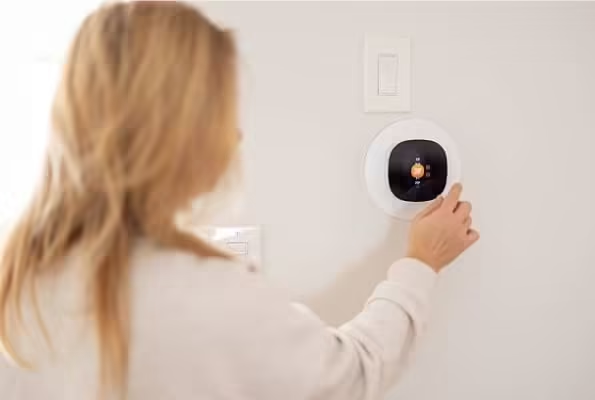
Daytime Setting: 68 Degrees While You’re Home
Sixty eight degrees sits at a point where most people stay comfortable without the system running constantly. It is not a strict rule though. The Department of Energy calls it the lowest comfortable temperature, and comfort looks different from one household to the next.
If you tend to run cold, you might land closer to 70. If you are comfortable in a sweater around the house, you might be fine a couple degrees lower. Either way, 68 is a solid place to start before you fine tune from there.
Night and Sleep Setting: How Low Should You Go?
Dropping the temperature 7 to 10 degrees while you sleep is a simple way to save on your bill without giving up much comfort. An extra blanket usually covers the difference, and most people barely notice once they are actually asleep.
If you have a heat pump, hold off on a deep overnight drop like this. The next section covers why, since the math works differently for heat pumps than it does for furnaces.
Away Setting: Saving Energy When No One’s Home
The same setback principle applies when you are out of the house for work or travel. A programmable thermostat handles this automatically once you set a schedule, and a smart model with location tracking can adjust the moment you leave or head home.
One note for longer trips in winter: do not turn the heat off completely. If a cold snap hits while you are away, an unheated home runs the risk of frozen pipes. A modest setback, not a full shutoff, gets you the savings without that risk.

Heat Pump Owners: Why Big Setbacks Can Backfire
Here is the part most general advice on this topic skips. A heat pump works by moving heat rather than generating it, and it is most efficient when it is asked to make small, steady adjustments.
When you raise the temperature several degrees all at once, like coming home after a deep overnight setback, the system can switch on backup electric heat to catch up faster.
That backup heat costs more to run than your heat pump does on its own. So a deep setback that would save money with a gas furnace can actually end up costing more with a heat pump once it kicks that backup heat on.
The fix is simple. Make smaller adjustments, somewhere around 1 to 2 degrees at a time, rather than a big nightly swing. A smart thermostat built with heat pumps in mind can also manage this recovery process on its own, so you do not have to think about it.
If your heat pump seems to run longer or louder than expected after you change the setting, A/C Man’s heat pump services can cover what that might mean.
Programmable and Smart Thermostats Make It Easier
Once you land on a schedule that works, a programmable thermostat takes the daily guesswork out of it. You set it once and let it run, rather than adjusting it by hand every morning and night.
Smart thermostats take this further, especially the models designed to work with heat pumps, since they manage that gradual recovery automatically instead of letting the system jump straight to backup heat. If you are thinking about upgrading, A/C Man’s thermostat services can walk you through which model fits your system.
Where You Place Your Thermostat Matters
Even the right setting can act strange if your thermostat sits in the wrong spot. A thermostat near a drafty window, a sunny spot, or a heating vent reads the temperature of that one small area, not your whole home, and it can cause your system to run longer or shorter than it actually needs to.
If your home always seems to run a little too hot or too cold no matter what number you set, thermostat placement is worth ruling out before you assume something is wrong with your heating system itself.
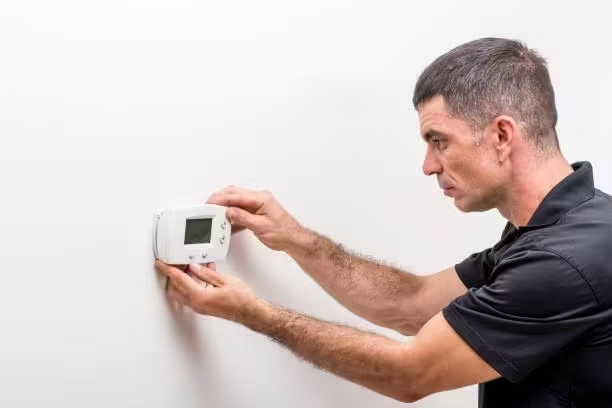
When to Call a Professional
If your thermostat is set correctly and your home still will not reach that temperature, or your system seems to run nonstop, that usually points to something beyond the setting itself. A/C Man’s thermostat technicians can tell you whether it is a thermostat issue or something with the heating system behind it.
Finding the Right Number for Your Home
Sixty eight degrees is a solid place to start, and the setback principle works well for most homes once you understand your system. The real key is matching your approach to what is actually heating your house, especially if that is a heat pump.
If you are tired of manually adjusting the thermostat every day, or you are not sure your current setup is working the way it should, A/C Man’s thermostat services can help you find or install a thermostat built for your system. Call us at (910) 841 2106 to get started.
Frequently Asked Questions
What temperature should I set my thermostat at night in winter?
A common target is 7 to 10 degrees below your daytime setting, so if you run 68 during the day, somewhere around 58 to 61 at night works for most homes. Heat pump owners should keep the drop smaller and more gradual.
Is 68 degrees too cold for winter?
Not according to the Department of Energy, which lists 68 as a typical comfortable temperature for most households while home and awake. Comfort varies by person, so some households run a couple degrees warmer and still save energy elsewhere.
Should I turn my heat pump off at night to save money?
No. Shutting it off or setting a deep overnight drop can force the system to rely on backup heat to catch up in the morning, which usually costs more than just leaving it on a steady, modest setting through the night.
Does lowering the thermostat really save money in winter?
Yes, especially with a furnace. The Department of Energy estimates up to 10 percent in annual savings from a 7 to 10 degree setback for about eight hours a day. Heat pump households see savings too, just with smaller, more gradual adjustments.
What’s the difference between thermostat settings for a furnace and a heat pump?
Furnaces recover quickly from a big setback, so bigger overnight drops tend to save money. Heat pumps work better with small, steady changes, since asking them to catch up fast can trigger backup heat that costs more than staying level.
