
Why Your AC Cools Fine at 8:00 AM but Quits at 2:00 PM
The air conditioner starts the day strong. By breakfast, the house feels cool and comfortable. Then the afternoon heat rolls in, the air from the vents turns lukewarm, and lowering the thermostat does not bring steady cooling back.
That pattern usually means the system can handle lighter morning demand but struggles once outdoor temperatures peak. Most cooling systems are designed to maintain about a 16 to 20 degree difference between indoor and outdoor temperatures, so the hottest part of the day can expose problems that stayed hidden earlier.
In many cases, the cause is fixable. A dirty coil, clogged filter, low refrigerant level, weak capacitor, airflow restriction, or undersized system can all show up as afternoon cooling loss. In this guide, we’ll explain why your AC cools in the morning but struggles later in the day, what you can check first, and when it is time to schedule professional AC service.
Key takeaways:
- An AC that fails only in afternoon heat points to a heat sensitive fault, not a random breakdown.
- A weak run capacitor often cools fine when cool but cannot restart the compressor once it gets hot.
- Low refrigerant and dirty coils lose the most cooling power exactly when the heat peaks.
- Sometimes nothing is broken, and your system has simply reached its design temperature limit.
- A spring tune up catches most afternoon failures before the first real heat wave.
Why Does Your AC Stop Cooling in the Afternoon?
Your AC stops cooling in the afternoon because peak heat exposes a system that is already running near its limit. A weak run capacitor, low refrigerant, a dirty condenser coil, or a frozen evaporator coil all surface under heavy load. In some homes, the unit has simply hit its design temperature ceiling and cannot pull the indoor air any cooler.
Here is the part most homeowners miss: At 8 a.m., the heat load on your home is light, so even a marginal system coasts along and keeps you comfortable. By 2 p.m., outdoor temperatures, roof heat, and sun through the windows all peak at once.
Your air conditioner has to work at full output for hours. Any small weakness that hides in the cool of the morning becomes obvious the moment the system runs flat out. The timing is not a coincidence. It is your system telling you where it is struggling.
The 7 Reasons Your AC Quits in the Afternoon Heat
Most afternoon cooling failures fall into one of seven causes. Some you can rule out yourself. Others need a licensed technician and the right tools. Walking through them in order will help you understand what is happening inside your AC unit before anyone shows up.
1. A Weak or Failing Run Capacitor
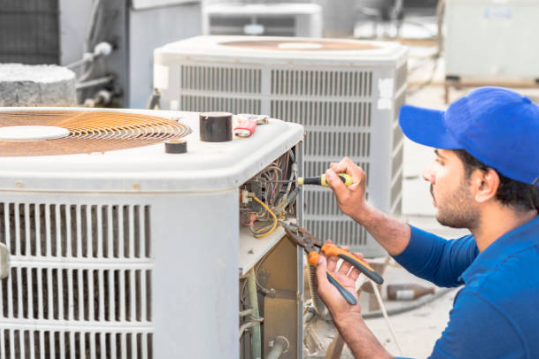
A failing run capacitor is the classic 2 p.m. breakdown. The capacitor gives your compressor and fan motor the jolt of energy they need to start. When it weakens, it can still fire in the cool morning air, but once the metal heats up through the afternoon, it loses just enough punch to leave the compressor unable to restart.
The outdoor fan may spin while the compressor sits silent, so the system blows room temperature air. Heat makes a borderline capacitor worse, which is exactly why the problem clusters in the hottest hours. This is one of the most common repairs we make, and a stocked truck usually fixes it in a single visit.
2. Low or Leaking Refrigerant
Refrigerant is what actually moves heat out of your home, and a low charge cripples cooling capacity right when you need it most. The catch is that low refrigerant almost always means a leak, not a system that needs a routine top off.
As outdoor temperatures climb, an undercharged system falls further and further behind, which is why the house creeps warmer every afternoon. Warning signs include ice on the copper lines, a hissing or bubbling sound near the unit, and higher energy bills. A technician has to find and seal the leak, then recharge the system to the manufacturer spec.
3. A Dirty Condenser Coil or Outdoor Unit
Your outdoor condenser coil dumps your home’s heat into the air outside, and it can only do that job if air moves freely across it. Grass clippings, pollen, dryer lint, and dust pack into the fins over a season and choke that airflow.
On a mild morning the coil still sheds enough heat to get by. During afternoon heat, head pressure climbs, the compressor strains, and cooling output drops or shuts down on a safety control. Keeping two feet of clear space around the unit and rinsing the coil gently with a hose helps, though a baked-on layer of grime calls for a professional cleaning.
4. A Frozen Evaporator Coil
A frozen evaporator coil explains the odd cycle where your AC cools at night, quits by afternoon, then works again the next morning. Low airflow or low refrigerant lets the indoor coil drop below freezing, and a sheet of ice builds across it as the system runs.
That ice blocks airflow, so warm air pours from your vents by mid day. Shut the system off overnight and the ice melts, which is why cooling seems to return on its own. The freeze comes right back unless the airflow or refrigerant problem behind it gets fixed.
5. A Dirty Air Filter or Restricted Airflow
A clogged air filter is the cheapest problem on this list and one of the most common. When the filter loads up with dust, your blower cannot pull enough air across the evaporator coil. Cooling output falls, and the starved airflow can even push the coil into a freeze, which compounds the afternoon failure.
Most filters need a change every 30 to 60 days during cooling season, sooner if you have pets or run the system hard. It is a five minute task that prevents a surprising number of service calls.
6. Direct Sun and Heat Load on the Unit or Thermostat
Placement matters more than people expect. An outdoor condenser baking in full afternoon sun runs hotter and sheds heat less efficiently than one in shade, which raises head pressure during the worst part of the day. Inside, a thermostat mounted on a sunlit wall or near a hot window can misread the room and cycle the system in confusing ways.
Add in west facing windows pouring solar heat into your living room after lunch, and your AC fights a load it never sees in the morning. Shade, blinds, and smart placement all take pressure off the system.
7. An Aging System That Has Hit Its Limit
Sometimes nothing is broken, and physics is the whole story. Air conditioners are sized with a Manual J load calculation to hold a set temperature differential, generally 16 to 20 degrees cooler than the outdoor air. When it is 95 degrees outside, a healthy system is only designed to reach about 75 to 78 degrees indoors.
An older or undersized unit, leaky ductwork, or thin insulation all shrink that margin further, so the house drifts warm on the hottest afternoons even though the equipment is doing its job. In Fayetteville, where summers bring more than 80 days above 90 degrees a year, this limit gets tested often.
If your system is past 10 to 15 years old and losing ground every July, it may be time to weigh a higher efficiency replacement.
What You Can Check Yourself Before Calling
A few quick checks rule out the simple stuff and sometimes get your cooling back on their own. Set the thermostat to cool and a few degrees lower to confirm it calls for cooling. Replace a dirty air filter with a fresh one. Clear leaves and debris so there is open space around the outdoor unit, then rinse the coil gently with a garden hose. Close blinds on sun facing windows to cut the afternoon heat load. If the breaker has tripped, reset it one time.
What you should never touch is the refrigerant or the capacitor. A charged capacitor can hold a dangerous shock even with the power off, and handling refrigerant without a license is illegal and unsafe. If the basics do not bring the cool back, the next step is a professional diagnosis.
When to Call an HVAC Professional in Fayetteville
Call a professional when the compressor will not restart, you see ice on the refrigerant lines, the breaker keeps tripping, the air stays warm while the unit runs, or the same afternoon failure returns day after day. Those point to a capacitor, refrigerant, or electrical issue that needs proper tools and training to fix safely.
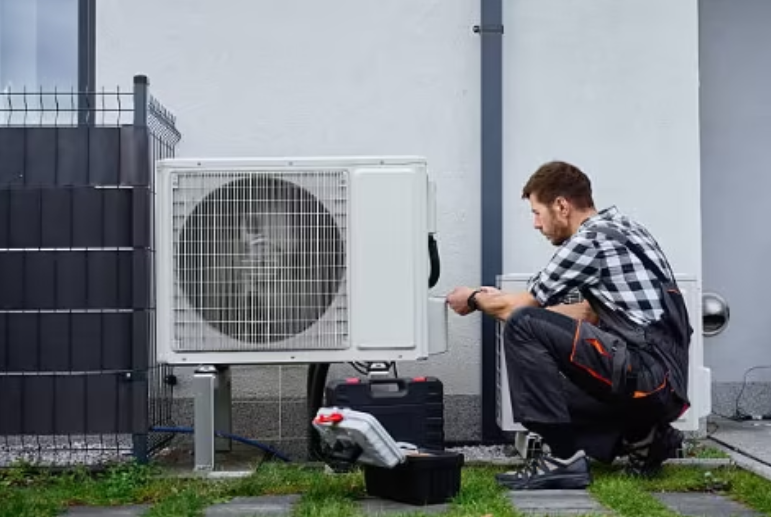
This is where A/C Man Heating and Air comes in. Our certified technicians run a full diagnostic on the electrical connections, refrigerant charge, airflow, and safety controls, then show you exactly where your system stands before any work begins.
We provide same day air conditioning repair across Fayetteville, and our trucks carry common parts like run capacitors, so most afternoon outages get solved in one visit. A/C Man Heating and Air is a veteran-owned company with 817 {4.9}-star Google reviews from local homeowners, and every repair is backed by guaranteed workmanship.
A Real Fayetteville Afternoon Outage Fix
A homeowner in the Vanstory Hills neighborhood off Cliffdale Road called A/C Man Heating and Air after the same frustrating pattern repeated all week. Their AC blew cold every morning, then went warm right around 2 p.m. and stayed that way until the evening cooled off.
Our technician arrived the same day and traced it to two issues working together. The run capacitor had drifted out of spec and was failing once the outdoor unit heated up, and a season of buildup on the condenser coil was raising head pressure and starving the system of airflow.
We replaced the capacitor, cleaned the coil, verified the refrigerant charge, and restarted the unit under full load to confirm the fix held through the heat.
The cooling stayed steady through the hottest part of the afternoon, and the homeowner avoided a far larger compressor repair down the road. It is a clear example of how a small electrical part and a dirty coil can team up to knock out your AC exactly when you need it most.
How to Stop the Afternoon Slump From Coming Back
Most afternoon failures are preventable, and the fix costs far less than an emergency repair. A spring tune up clears the condenser coil, tests the capacitor and electrical connections, checks the refrigerant charge, and confirms airflow before the first heat wave hits. Pair that with a fresh air filter every 30 to 60 days and clear space around the outdoor unit, and you remove the most common reasons a system quits under load.
That is the purpose of the A/C Man Heating and Air Precision maintenance program. With seasonal maintenance visits, technicians can inspect critical components, test system performance, clean key parts, and identify developing issues before they affect cooling. Catching problems early helps keep your air conditioner operating reliably when summer temperatures are at their highest.
Getting Reliable Afternoon Cooling Back in Your Fayetteville Home
The pattern you are seeing is a diagnosis waiting to happen. An AC that cools at 8 a.m. and quits at 2 p.m. is pointing straight at a heat sensitive cause, whether that is a fading capacitor, a low refrigerant charge, a clogged coil, or a system that has reached the edge of what it was built to do. Almost all of it is fixable, and most of it is preventable with seasonal care.
If your cooling keeps fading in the afternoon, do not wait for it to fail completely in the middle of a heat wave. Call A/C Man Heating and Air at (910) 841-2106 or schedule your service online, and our team will get your home cool and keep it that way through the hottest part of the day.
FAQs
Why does my AC work in the morning but not in the afternoon?
Your AC works in the morning because the heat load is light, then quits in the afternoon when peak heat pushes the system to full output. That stress exposes weak points like a failing capacitor, low refrigerant, or a dirty coil.
Can a bad capacitor cause my AC to stop cooling only when it is hot?
Yes. A weak run capacitor can still start the compressor in cool morning air but lose just enough strength once the unit heats up in the afternoon. The compressor then fails to start, so the system blows warm air until things cool down.
Is it normal for my AC to not keep up on the hottest days?
Sometimes, yes. Air conditioners are designed to hold roughly a 16 to 20 degree difference from the outdoor temperature. On a 95 degree afternoon, reaching about 75 to 78 degrees indoors is normal, though an older or undersized system will struggle more.
Why does my AC freeze up in the afternoon and work again at night?
Low airflow or low refrigerant lets ice build on the evaporator coil as the system runs, which blocks airflow and stops cooling by afternoon. Overnight the ice melts, so cooling returns the next morning until the underlying problem is fixed.
Should I repair my AC or replace it if it keeps quitting in the afternoon?
Repair usually makes sense for a younger system with a single failed part. Consider replacement when the unit is past 10 to 15 years, repairs are stacking up, or it loses ground every summer despite maintenance. A technician can compare both costs for your home.
