
Why Your Fayetteville AC Smells Like a Dirty Sock (and the 30-Minute Fix Most Techs Won't Tell You About)
Spring arrives, the AC gets switched on for the first time in months, and suddenly the entire house smells terrible. The odor is damp, musty, and strong enough to make the whole home feel dirty within minutes. Many homeowners immediately assume something major has failed inside the air conditioning system, especially when the smell spreads through every vent so quickly.
In most cases, the system itself is not dying. What is usually happening is something called “dirty sock syndrome,” a common issue caused by moisture, bacteria, and mold buildup on the evaporator coil inside the HVAC system. When the AC starts running again after sitting idle, that buildup releases a stale, sour smell throughout the house.
The frustrating part is that many homeowners end up paying for expensive add-ons, chemical treatments, or upgrades before addressing the actual cause. In reality, the fix is often much simpler than people expect. A clogged air filter, excess moisture on the coil, or poor airflow can all contribute to the smell, and some of the first troubleshooting steps cost very little to handle.
This guide explains what causes dirty sock syndrome, why your AC suddenly smells bad, what steps can solve it quickly, and when it is finally time to call a professional for a deeper evaporator coil cleaning.
Key Takeaways
- Dirty sock syndrome happens when mold, bacteria, and moisture build up on evaporator coils over time.
- Replacing clogged air filters often improves airflow and reduces musty AC odors surprisingly fast afterward.
- Running your system in fan-only mode helps dry evaporator coils and reduce lingering moisture buildup.
- Professional evaporator coil cleaning permanently removes deep biological buildup causing persistent dirty sock smells indoors.
- Expensive UV lights and chemical treatments are optional upgrades, not immediate solutions for odor problems.
What Dirty Sock Syndrome Actually Is
Dirty sock syndrome is a specific problem with a specific cause, and understanding it immediately stops most of the panic.
Your air conditioner works by pulling warm air from your home through a filter, passing it over a cold evaporator coil, and sending that cooled air back into your rooms. The evaporator coil is constantly wet with condensation. Water drips off the coil into a drain pan and out of your system through a condensate drain line.
Dust, dirt, and organic particles naturally collect on the evaporator coil over time because the coil stays damp long after the AC shuts off. That lingering moisture, combined with trapped debris and limited airflow, creates the perfect environment for mold and bacteria growth. Over weeks and months, buildup continues spreading across the coil surface.
Once the AC starts running again, especially after sitting unused through winter, those odors move through the ductwork and spread into every room of the house. The smell is usually musty, stale, damp, and impossible to ignore.
A smell like this does not automatically mean the air conditioning system is failing. Most of the time, biological growth has simply developed on a consistently wet surface inside the HVAC system.
Spring is when homeowners usually notice the odor most because the cooling system has remained inactive for months. During that downtime, moisture sits on the coil, where it can’t dry completely due to insufficient airflow. As soon as the cooling season starts again, the first AC cycle pushes that trapped smell throughout the home almost immediately.
Why This Happens to Your AC Specifically
Dirty sock syndrome is more common in certain types of systems, and understanding why helps you understand why fixing it isn’t always a one-time solution.
Modern air conditioning systems, especially heat pumps, often have special coatings on the evaporator coil designed to be hydrophilic, meaning water naturally sticks to them. This coating helps the system transfer heat more efficiently. The tradeoff is that bacteria and mold also stick to these coatings more readily. Systems with these special coatings are statistically more prone to dirty sock syndrome.
Additionally, if your air conditioner is in an older home with poor air sealing, high humidity, or limited ventilation, moisture levels are naturally higher. Your AC has to work harder to dehumidify, which means the coil runs wetter and stays wet longer. More moisture equals more mold.
If you have a ductless mini-split system, window unit, or portable AC, you’re not immune. Any cooling system with a wet evaporator coil can develop mold if conditions are right.
Lastly, if your system hasn’t been properly maintained, if filters are replaced infrequently, or if the condensate drain line is slow or clogged, the coil environment becomes more favorable for mold growth. Poor maintenance accelerates the problem significantly.
The 30-Minute Fix: What You Can Do Right Now
Before you call a contractor, try this. It works surprisingly often, and it costs almost nothing.
Step 1: Turn off your AC completely. Walk to your furnace or air handler (usually in a basement, attic, or closet) and locate the air filter. Pull it out. If it looks dark, clogged, or obviously dirty, this is part of your problem. A filthy filter restricts airflow, which means air doesn’t move quickly over the coil. Stagnant air allows mold to thrive. Replace the filter with a new one. Standard 1-inch filters cost $10 to $25. Don’t overthink it. Get the right size for your system and move on.
Step 2: Turn the AC back on but set it to “fan only” mode on your thermostat. Not cooling. Just the fan running. Leave it running for 2 to 4 hours continuously. What you’re doing is blowing warm air over the cold coil without actually cooling the house. This dries the coil out significantly. You’re removing the moisture that the mold needs to survive.
Step 3: After 4 hours, switch the thermostat back to normal cooling mode. If the smell is gone or much better, congratulations. You just fixed your problem for under $25 and zero professional service calls.
If the smell is still there, move to the next step. But honestly, if you’ve got a filthy filter and haven’t run the system in months, this simple step clears the issue about 40% of the time.
When DIY Isn’t Enough: The Professional Evaporator Coil Cleaning
If replacing the filter and running fan mode doesn’t eliminate the smell within 24 hours, the mold is too established. The coil itself needs professional cleaning.
This is where you need to call professional AC installation and maintenance experts. A licensed HVAC technician will access the evaporator coil directly and do what you cannot do from your thermostat: physically clean the coil.
Here’s what that process usually looks like:
- The technician shuts off the HVAC system before accessing the indoor air handler safely.
- The air handler is typically located in a basement, attic, garage, or utility closet area.
- Compressed air, soft brushes, and specialized alkaline coil cleaners remove mold and accumulated biofilm buildup.
- The condensate drain line gets flushed to ensure moisture drains properly without future standing water issues.
- Most professional evaporator coil cleanings take between one and two hours to complete fully.
After cleaning, the smell disappears completely. The mold is gone. Your AC will smell fresh when you run it again.
Important note: Don’t let a contractor spray undiluted bleach on the coil. Bleach corrodes aluminum, and your coil is aluminum. Some coil cleaners contain bleach in diluted, coil-safe concentrations, but straight bleach is dangerous and will damage the system.
Common Upsells You Don’t Need Right Away
Once you’ve called a technician and they mention dirty sock syndrome, there’s a good chance they’ll pitch you additional products and services. Here’s what’s actually worth considering versus what you can skip.
UV-C light purifiers: These install near the evaporator coil and kill bacteria and mold spores with ultraviolet light before they can grow. Cost: $300 to $800 installed. These are genuinely effective at preventing future dirty sock syndrome, but they’re preventative, not curative. Use them after you’ve already fixed the problem, not as a substitute for cleaning the coil.
Whole-home dehumidification systems: If your home’s humidity consistently exceeds 60%, adding a dehumidifier to your HVAC system can help prevent mold regrowth. Cost: $500 to $2,000. This is useful if you live in a naturally humid climate or have humidity problems year-round. But don’t install one just because a technician suggests it. Many homes in North Carolina don’t need it.
Enzyme treatments or mold inhibitor coatings: These are applied to the coil after cleaning to “prevent” mold regrowth. Cost: $100 to $300. Here’s the honest truth: these help a little, but regular maintenance prevents mold just as effectively. If you change your air filter every 3 months and keep your condensate drain line clear, you won’t get dirty sock syndrome again.
“System diagnosis” or “ductwork inspection”: These are often quoted at $150 to $300 and sometimes add nothing to your understanding of the problem. You already know what’s wrong: your coil has mold. You don’t need an expensive diagnosis. If the technician recommends ductwork cleaning or sealing, ask why. Don’t pay for inspections disguised as diagnostic fees.
Prevention: The Simple Maintenance That Actually Stops It From Coming Back
Once you’ve fixed dirty sock syndrome, the goal is never having it again. This doesn’t require expensive equipment or quarterly service calls. It requires basic maintenance discipline.
Change your air filter every 3 months.
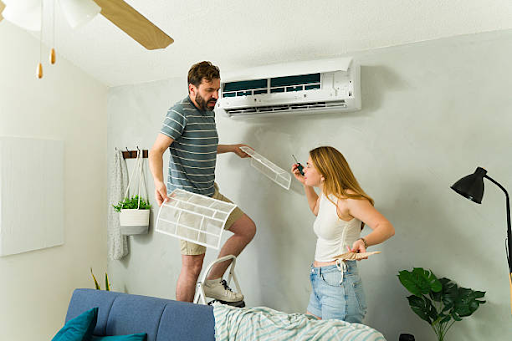
A clean filter means air flows freely over the coil. A dirty filter restricts airflow, which leads to moisture accumulation and mold growth. This is the single most important preventative step. Mark it on your calendar. It costs $15 to $30 per filter and takes 5 minutes. There is no cheaper insurance against dirty sock syndrome than this.
Run your AC on fan mode for a few hours before you shut it down for the season.
In late fall, before you switch to heat, run the AC in fan-only mode for 3 to 4 hours. This dries out the evaporator coil before the system goes dormant for winter. When you’re switching from heat to cooling in spring, do the same thing. It’s a 10-minute setup that prevents weeks of mold growth.
Check your condensate drain line quarterly.
Walk to your indoor air handler. There should be a small PVC line running down from it, usually exiting outside near your AC condenser unit. If you see water pooling or dripping slowly, the line is clogged. Many mold problems start with a slow drain line. If you see blockage, pour distilled white vinegar down the line to clear it. If that doesn’t work, call a technician to flush it. Cost is usually $50 to $100, and it prevents far more expensive coil cleaning.
Keep your indoor humidity between 30 and 50 percent.
Mold thrives above 60% humidity. If you live in a humid climate or notice condensation on windows and walls, you’ve got a humidity problem. This is where a dehumidifier might actually be worth considering. But first, make sure your AC is running properly and your ductwork is sealed. Poor AC performance or air leaks drive humidity up.
How Residential HVAC Services Help You Avoid This Problem
Annual HVAC maintenance catches problems before they become smelly. A yearly AC tune-up includes filter replacement, coil inspection, drain line cleaning, and condensate pan evaluation. During a routine visit, a technician can see mold forming before you ever smell it. They can clean the coil while the buildup is minimal, which is easier and cheaper than waiting until the problem forces an emergency call.
This is why homeowners who do annual maintenance rarely experience dirty sock syndrome. It’s not magic. It’s just catching the problem early when it’s a 30-minute fix instead of a 2-hour emergency.
At A/C Man Heating & Air Conditioning, we serve Fayetteville and surrounding areas with exactly this kind of preventative care. Most homeowners find that residential HVAC services and routine maintenance save them money and stress over time. If you’re already dealing with dirty sock syndrome, we can clean that coil and get your AC smelling fresh again. If you want to prevent it, a yearly tune-up is your best investment.
A Haymount Homeowner Got Rid of a Musty AC Smell Before Summer Fully Started
A homeowner near Fort Bragg Road in the Haymount area of Fayetteville contacted A/C Man Heating & Air Conditioning after turning on the AC for the first time in spring and noticing a strong musty odor spreading through the house. The smell became stronger every time the system cycled on, especially in the upstairs bedrooms.
During the inspection, our technician found a heavily clogged air filter along with moisture and biological buildup developing on the evaporator coil inside the air handler. We replaced the filter, cleaned the coil and condensate drain system, and recommended running the fan mode briefly before seasonal shutdowns to help reduce future moisture buildup.
This is a common example of dirty sock syndrome developing after months of inactivity during cooler weather. Addressing the airflow and moisture issue early helped restore indoor air quality and prevented additional mold buildup inside the HVAC system.
When You Actually Need a New AC System
This is important: dirty sock syndrome does not mean your AC is dying or needs replacement. It’s a maintenance issue, not a system failure. A mold-covered coil can be cleaned. A clogged drain line can be flushed. An old filter can be replaced. None of these are reasons to buy a new system.
That said, if your AC is 15+ years old and already dealing with dirty sock syndrome, you’re fighting an uphill battle. Older systems have weaker coatings, poorer dehumidification efficiency, and more airflow restrictions.
If you’re dealing with repeated mold problems even after professional cleaning, and your system is getting old, it might be time to consider replacement. But the mold smell itself is not the reason. Age and efficiency are.
If you need a new unit, you want one rated 13+ SEER2 with proper dehumidification for North Carolina’s climate. When you’re ready to request an HVAC estimate, make sure the contractor sizes the system correctly for your home and installs it properly. A new system that’s oversized or poorly installed can develop dirty sock syndrome faster than an older system that’s well-maintained.
What to Do Right Now If Your AC Smells Bad
You now understand the problem and how to fix it. Here’s your action plan.
If the smell just started today or yesterday: Replace your air filter and run the AC in fan mode for 4 hours. Ninety percent of the time, this solves it.
If the smell has been there for a week: Do the filter and fan mode step, then wait 24 hours. If it’s not gone, schedule HVAC service for a professional coil cleaning. Don’t delay on this. The longer mold sits on the coil, the more established it becomes.
If you have a history of dirty sock syndrome recurring every spring: Annual maintenance is your answer. Contact our HVAC team to discuss a maintenance plan that includes spring and fall system conditioning to prevent seasonal mold growth.
If you’ve had the coil professionally cleaned and the smell came back within months: There’s a secondary issue. Poor humidity control, a clogged drain line, or a filter that’s too restrictive might be driving the problem. Don’t just keep paying for coil cleanings. Fix the underlying cause.
FAQs
Is dirty sock syndrome dangerous?
No. The mold in your AC is not toxic. It won’t make you sick, though it might trigger allergies if you’re sensitive to mold spores. The smell is unpleasant, but the real issue is comfort and the fact that mold on the coil reduces efficiency and increases energy costs. Fix it because it’s annoying, not because it’s hazardous.
How much does it cost to fix dirty sock syndrome?
If you can solve it with a new air filter and fan mode, cost is under $25. If you need professional coil cleaning, expect $150 to $400. Add-ons like UV lights or enzyme treatments run $100 to $800. You can control the cost by starting simple and only upgrading if the simple fix doesn’t work.
Can I clean the evaporator coil myself?
Technically, you can access and clean the coil yourself if you’re confident with basic tools and electrical safety. However, the coil is delicate, and if you damage it, you’re looking at a $500+ replacement. The condensate drain line, you can clean yourself using vinegar or a plumbing snake. The coil itself is worth having a professional handle.
How do I know if the smell is dirty sock syndrome or something else?
Dirty sock syndrome has a specific musty, moldy, stale smell. If your AC smells like burning plastic, rotten eggs, or chemical fumes, it’s something different (and you should call a technician immediately). If it smells like a locker room or basement after rain, it’s mold on the coil. That’s dirty sock syndrome.
Will a new air filter stop dirty sock syndrome forever?
No. A clean filter helps prevent mold by allowing good airflow, but it won’t stop mold if the fundamental conditions favor growth. Humidity, coil moisture, dust accumulation, and drain line clogs are the real drivers. A clean filter is part of a prevention strategy, not the complete solution. You also need the other maintenance steps.
Should I replace my AC if it has dirty sock syndrome?
Only if the system is already old (15+ years) and has recurring problems even after professional cleaning. A younger system with mold on the coil just needs cleaning and better maintenance. New systems can develop dirty sock syndrome too if they’re not maintained properly. The problem is maintenance, not the age of the equipment.
