
How Much Does Indoor Air Quality Testing Cost in Fayetteville, NC?
Headaches that fade the moment you leave the house. A cough that lingers all through Fayetteville’s humid summer. A musty smell you have stopped noticing but guests mention the second they walk in. Air you cannot see is easy to ignore, right up until your body stops ignoring it. Testing tells you what is actually drifting through your home, and the first question is always what it costs.
In this blog, you will learn what indoor air quality testing costs in Fayetteville, NC, what each individual test covers, the factors that push the price up or down, and why local conditions here, from surprising radon readings to the region’s heavy humidity, make testing worth more than the zone map would suggest. Clear pricing, real Cumberland County data, and no scare tactics, so you can decide whether a test belongs on your list this year.
Key Takeaways
- Most Fayetteville homeowners pay $300 to $600 for indoor air quality testing.
- Individual tests for mold, radon, or VOCs cost roughly $135 to $300 each.
- Fayetteville’s average radon reads 5.0 pCi/L, above the EPA action level.
- North Carolina has no state license for mold or air testing, so vetting matters.
- Bundling several tests together lowers the per-test price significantly.
The Short Answer: What Indoor Air Quality Testing Costs in Fayetteville, NC
Most Fayetteville homeowners spend between $300 and $600 for professional indoor air quality testing, with the national average landing around $435. A single-contaminant test costs less, a full multi-point assessment costs more, and the final number depends on your home’s size and how many pollutants you screen for.
Here is how the pricing breaks down in practice:
|
Test type |
Typical Cost |
|
Full multi-contaminant assessment |
$300 to $600 |
|
Mold and moisture assessment |
around $295 |
|
Radon test |
$135 to $300 |
|
VOC (volatile organic compound) test |
$200 to $300 |
|
Allergen, particulate, or carbon monoxide screening |
$100 to $250 |
|
Typical range most homeowners pay |
$266 to $712 |
A basic assessment usually screens for the common culprits: mold, VOCs, allergens, and carbon monoxide. Adding radon, formaldehyde, asbestos, or lab-analyzed particulate testing raises the total. The single biggest way to control cost is bundling, since ordering several tests at once almost always beats paying for each one separately.
Price alone is only half the story. Knowing what each test actually looks for tells you which ones your home needs.
What Indoor Air Quality Testing Actually Checks For
Indoor air quality testing is not one test. It is a menu, and the right combination depends on your home, your symptoms, and Fayetteville’s specific risks. These are the contaminants worth understanding before you pay for anything.
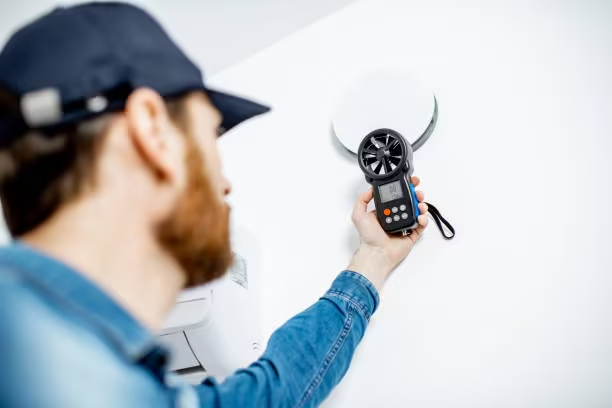
Mold and Moisture
Mold is the contaminant most Fayetteville homes have reason to check. A mold assessment runs around $295 and typically pairs air sampling with a moisture reading, since mold follows dampness. In a humid subtropical climate where summer relative humidity sits near 75%, mold has ideal conditions for months at a stretch, especially in crawl spaces, bathrooms, and around HVAC equipment.
Radon
Radon testing costs $135 to $300 and matters far more in this area than most homeowners assume. Radon is a colorless, odorless gas that seeps up from the soil through cracks in the foundation, and the EPA identifies it as the second leading cause of lung cancer, responsible for roughly 21,000 deaths a year in the United States. The local twist on radon gets its own section below, because Fayetteville’s numbers do not match its map.
Volatile Organic Compounds (VOCs)
VOC testing runs $200 to $300 and screens for gases released by paints, adhesives, new flooring, cleaning products, and furniture. Newer and tightly sealed homes often trap higher VOC levels because energy-efficient construction reduces the natural ventilation that used to flush these gases out.
Allergens, Particulates, and Carbon Monoxide
These screenings, usually $100 to $250, look for dust, pollen, pet dander, fine particulate matter, and carbon monoxide. In a region with a long pollen season, particulate and allergen testing helps explain symptoms that flare indoors even when the windows stay shut.
Once you know which contaminants apply to your home, the next question is what makes one quote higher than another.
What Makes Your Testing Price Go Up or Down
Two Fayetteville homes rarely get the same quote, and the reasons are predictable once you know what shapes the number.
Home size and number of sample points. A larger home needs more air samples to get an accurate picture, and each sample adds cost. A small single-story house tests cheaper than a sprawling two-story with a finished crawl space.
How many contaminants you screen. A single radon test is the cheapest way in. A full assessment covering mold, radon, VOCs, and allergens sits at the top of the range because each contaminant requires its own method and, often, its own lab analysis.
Lab analysis versus on-site reading. Some results come from a handheld monitor on the spot. Others require sending samples to a laboratory, which adds turnaround time and fees but delivers far more precise data. Mold and VOC testing usually involves lab work.
Bundling. Ordering several tests together lowers the per-test cost, which is why a bundled mold-plus-radon-plus-VOC package often costs less than the same three ordered one at a time.
Standalone testing versus an HVAC-integrated assessment. A dedicated environmental tester checks the air. An HVAC professional assessing your indoor air quality looks at the whole system: how your ductwork, filtration, humidity control, and ventilation are shaping the air you breathe. For most homeowners chasing a real fix rather than just a number, the second approach connects the test result to a solution.
Understanding the price is one thing. Understanding why Fayetteville homes carry more risk than the averages suggest is what makes testing worth the spend.
Why Fayetteville Homes Have More to Test For Than You Think
Fayetteville’s air carries risks that a national average glosses over. Two local realities drive most of it: a climate built for mold, and radon numbers that defy the map.
Start with the climate. Fayetteville sits in a humid subtropical zone where July humidity averages about 75% and stays high through much of the year. That moisture is exactly what mold and dust mites need to thrive, and it collects in crawl spaces and around cooling equipment where you never see it. Add the region’s long pollen season, and indoor allergen loads climb even in a well-kept home.
The bigger picture makes testing matter more. Americans spend roughly 90% of their time indoors, and the EPA reports that indoor concentrations of some pollutants run two to five times higher than outdoor levels, occasionally more than 100 times higher. Modern, tightly built homes make this worse by sealing pollutants in without enough ventilation to clear them. The air inside your Fayetteville home is very likely dirtier than the air in your yard, and you breathe far more of it.
None of that is a reason to panic. It is a reason to measure. A test turns a vague worry into a specific, fixable number, and the radon piece is where measuring pays off most.
The Radon Surprise in Cumberland County
Radon is the clearest case for testing in Fayetteville, because the official map undersells the real risk. The EPA places Cumberland County in Radon Zone 3, its lowest-risk category, which predicts an average indoor screening level below 2 pCi/L. That classification alone leads plenty of homeowners to skip testing.
The measured numbers tell a different story. The average radon level recorded in Fayetteville is 5.0 pCi/L, which sits above the EPA’s action level of 4.0 pCi/L. Statewide, 77 of North Carolina’s 100 counties have recorded indoor radon above that action level. A low-risk zone assignment does not mean a low-risk house, because radon depends on the soil and construction under your specific home, not on a county-wide average.
That gap between prediction and reality is exactly why the North Carolina Radon Program, run through NCDHHS, urges every home to test regardless of zone. A radon test is inexpensive, the fix when levels are high is well understood, and the consequence of ignoring it is the one indoor air risk directly tied to lung cancer. If you test for only one thing in a Fayetteville home, test for radon.
Testing is only useful if the person doing it is credible, and in North Carolina that is not a given.
No State License for Air Testing in NC: How to Vet Your Tester
North Carolina does not license mold or indoor air quality testers, which changes how you should shop. As of 2026, the state has no mandatory mold-assessment or air-testing license, meaning anyone can legally offer the service. That makes vetting your provider your job, not the state’s.
The North Carolina mold guidance from NC DPH recommends checking a consultant’s qualifications carefully because the field relies on voluntary certification rather than a state license. Look for recognized credentials such as ACAC, NORMI, or IICRC, ask how samples are analyzed and by which laboratory, and be cautious of any tester who also pressures you into an expensive remediation they happen to sell. Independent testing and honest interpretation are what you are paying for.
There is a practical advantage to having a licensed HVAC company handle the assessment. Heating and cooling contractors in North Carolina are licensed and accountable to the state board, they understand how your system moves and conditions air, and they can connect a test result to a real correction rather than leaving you with a report and no plan. The lack of a testing license makes choosing an established, accountable local company the safer route.
Knowing the cost and the risk still leaves one question: when is testing actually worth doing.
When Indoor Air Quality Testing Is Worth Paying For
Testing earns its cost in specific situations, not as a routine annual expense for every home. A few clear triggers make it a smart spend in Fayetteville.
Persistent symptoms that improve when you leave the house are the strongest signal: recurring headaches, congestion, coughing, fatigue, or worsening allergies indoors. If your body reacts to the house, the house is worth testing. New homeowners buying or moving into an older Fayetteville property have good reason to test for radon and mold before problems compound. Any home that has had water damage, flooding, or a plumbing leak should test for mold, since hidden growth follows moisture within days.
Renovations are another trigger. New flooring, paint, cabinetry, and furniture all off-gas VOCs, and a post-renovation test tells you whether the levels have settled. Homeowners with young children, older adults, or anyone managing asthma or heart or lung conditions also benefit, because these groups are most sensitive to indoor pollutants and spend the most time inside.
If none of those apply and your home feels fine, a single radon test is still the one screening worth doing here, given the local numbers. For everything else, let symptoms and events guide the spend rather than testing blindly.
Where to Start With Indoor Air Quality Testing in Fayetteville
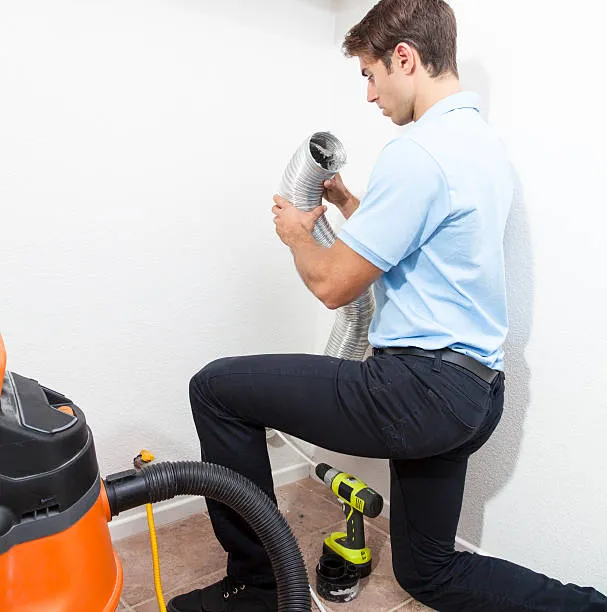
The real answer to what indoor air quality testing costs in Fayetteville, NC is $300 to $600 for a full assessment, or roughly $135 to $300 for a single test, with the exact figure set by your home’s size and the contaminants you screen. The number that matters more is the one you get back: a clear reading of what is in your air and whether it crosses a health threshold. Given Fayetteville’s humidity and its radon levels that run above the action line despite a low-risk zone, that reading is worth having.
The smart move is testing with an accountable, licensed local company that can interpret the result and fix what it finds, not just hand you a lab sheet. A test that ends in a report and no plan solves nothing. A test tied to a real correction protects your family and your home.
A/C Man Heating and Air assesses indoor air quality across Fayetteville and Cumberland County, screens for the contaminants that matter most in this climate, and connects every finding to a practical solution for your system. For straight answers about your home’s air, call A/C Man Heating and Air at 910-797-4287 or contact us to schedule an assessment.
FAQ
How much does indoor air quality testing cost in Fayetteville, NC?
A full multi-contaminant assessment typically costs $300 to $600, while single tests for mold, radon, or VOCs run roughly $135 to $300 each. Home size and the number of contaminants screened set the final price, and bundling several tests lowers the per-test cost.
Should I test for radon in Fayetteville even though it is a low-risk zone?
Yes. Cumberland County is EPA Radon Zone 3, the lowest-risk category, yet Fayetteville’s average recorded radon is 5.0 pCi/L, above the EPA’s 4.0 action level. Zone maps predict county averages, not your specific home, so testing is the only way to know.
Does North Carolina require a license to test indoor air quality?
No. As of 2026, North Carolina has no state license for mold assessment or indoor air quality testing, so anyone can offer the service. Look for voluntary certifications such as ACAC, NORMI, or IICRC, and consider using a licensed HVAC company that is accountable to the state board.
What is the most common indoor air problem in Fayetteville homes?
Mold and moisture, driven by the area’s humid subtropical climate where summer humidity averages near 75%. Crawl spaces, bathrooms, and areas around HVAC equipment are the usual trouble spots, which is why mold and moisture testing is often the first assessment homeowners order here.
How long does an indoor air quality test take?
On-site readings for gases like carbon monoxide are immediate, while radon tests usually run over several days and mold or VOC samples go to a lab, adding a few days to a week for results. A tester can give you an expected timeline for each contaminant when scheduling.
Is indoor air quality testing worth it?
For homes with persistent indoor symptoms, recent water damage, a recent renovation, or sensitive residents, yes. For everyone else in Fayetteville, a single radon test is still worth doing given the local readings, while broader testing is best guided by symptoms or specific events.
