
Variable-Speed vs Single-Stage AC: Which Is Right for Your Fayetteville Home?
It’s a muggy August evening in Fayetteville. The air conditioner kicks on with a thud, roars for ten minutes, shuts off, and the house feels cool but strangely sticky. Twenty minutes later, it does it all over again.
If that sounds familiar, you’ve already met a single-stage air conditioner. The variable-speed vs. single-stage AC decision is the biggest equipment choice you’ll make on your next replacement, and in a climate as humid as ours, it isn’t just about the electric bill. It’s about whether your home actually feels comfortable, or just reads 74 on the thermostat.
Key Takeaways
- A single-stage AC runs at 100 percent capacity or not at all. A variable-speed AC adjusts its output in small steps to match what your home needs at that moment.
- Variable-speed systems usually cost more upfront but run longer at low speed, which removes more moisture from the air. That matters in Fayetteville’s long, humid summers.
- In a Florida Solar Energy Center lab study, variable-capacity systems used roughly 20 to 30 percent less cooling energy than fixed-capacity systems and lowered indoor humidity by up to 15 percentage points during low-load periods.
- Every new split-system central AC installed in North Carolina must meet the Southeast regional minimum of 14.3 SEER2 for most home sizes. Single-stage units tend to sit near that floor, while variable-speed units sit at the top of the range.
- Fayetteville PWC charges more per kWh from 3 p.m. to 6 p.m. in summer, so a system that runs gently through the afternoon peak can help on bills.
- A single-stage system is still a sensible choice for smaller budgets, rental properties, or homes you plan to sell soon, as long as it’s sized correctly.
How a Single-Stage AC Works
A single-stage air conditioner has a compressor with one speed: full speed. When the thermostat calls for cooling, the compressor turns on and runs at 100 percent until the house reaches the set temperature. Then it shuts off completely.
That on-off pattern is simple and dependable. Single-stage systems have fewer electronic parts, cost less, and are familiar to every technician in town. For decades, they were the standard in almost every Fayetteville home.
The trade-off is that your home rarely needs 100 percent capacity. On a 95-degree July afternoon, it might. On a mild June morning or a cloudy September evening, it needs a fraction of that. A single-stage unit can’t scale down, so it blasts cold air, overshoots the thermostat’s target, shuts off, and repeats.
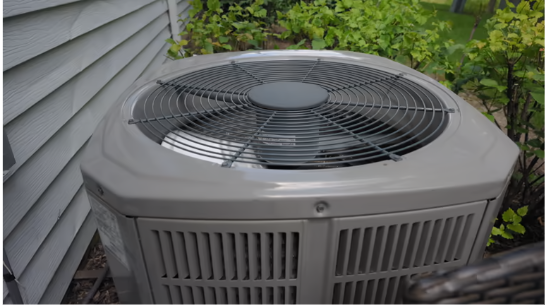
Those short bursts are where comfort problems start. The system cools the air quickly but often shuts down before it has run long enough to pull much moisture out. You get temperature swings of a few degrees, noticeable on-and-off noise, and rooms far from the air handler that never quite catch up.
How a Variable-Speed AC Works
A variable-speed air conditioner uses an inverter-driven compressor that can ramp its speed up and down. Instead of choosing between on and off, it can run at 40 percent, 65 percent, or full output, depending on the model and the conditions.
It pairs with a variable-speed blower in the indoor unit and, in most cases, a communicating thermostat. Together they track how much cooling your home needs and adjust continuously. On a hot afternoon, the system ramps up. Overnight, it might hum along at low speed for hours.
The result feels very different. Temperatures stay within a narrow band. Airflow is steady and quiet. And because the system runs longer at lower speed, the indoor coil stays cold long enough to wring more moisture out of the air.
Where Two-Stage Systems Fit
There’s also a middle option. A two-stage air conditioner has two settings, usually a low stage around 60 to 70 percent and a high stage at full capacity. It spends most of its time on low and only switches to high on the hottest days.
Two-stage units cost less than variable-speed models and deliver a noticeable comfort improvement over single-stage systems. If your budget can’t stretch to variable-speed, two-stage is often the sweet spot.
Why Humidity Changes the Variable-Speed vs Single-Stage AC Debate in Fayetteville
In a dry climate, the variable-speed vs single-stage AC choice is mostly about efficiency and noise. In Fayetteville, humidity moves it to the top of the list.
Our summers are long and damp. July highs average around 90 degrees, overnight lows often stay near 70, and the air carries heavy moisture for months. Your air conditioner isn’t just lowering the temperature. It’s also pulling water out of the air, and that part of the job is called latent cooling.
Dehumidification happens when warm, humid air passes over the cold indoor coil and moisture condenses onto it. The longer the coil stays cold with air moving across it, the more water it removes. Short cycles don’t give the coil enough time, so a single-stage system can leave your house cool but clammy.
Research backs this up. A Florida Solar Energy Center study by Charles Withers Jr., presented at the 2018 ACEEE Summer Study, found that a newer variable-capacity system reduced indoor relative humidity by up to 15 percentage points during low-cooling-load periods, compared with fixed-capacity equipment. The same work measured roughly 20 to 30 percent cooling energy savings in a controlled lab house.
Those low-load periods are common here. Think spring and fall afternoons, rainy summer days, and evenings after the sun goes down. Those are exactly the times a single-stage unit cycles most and dehumidifies least.
If you already deal with a sticky house even when the thermostat says you’re cool, we break down the causes and fixes in our guide to why your AC is cooling but the house still feels humid. Equipment choice is a big part of that story, but so are sizing, airflow settings, and crawl space moisture.
Efficiency Ratings and What North Carolina Requires
Efficiency is the second big difference, measured by SEER2, the current federal rating for seasonal cooling efficiency.
North Carolina sits in the Department of Energy’s Southeast region. Under the 2023 central air conditioner standards, split-system air conditioners under 45,000 Btu per hour installed here must meet at least 14.3 SEER2, and larger split systems must meet 13.8 SEER2. In the Southeast, enforcement is based on installation date, so any split-system AC installed on or after January 1, 2023 must meet those minimums. Split-system heat pumps must meet 14.3 SEER2 and 7.5 HSPF2 nationwide.
In practice, most single-stage models sit near those minimums. Two-stage models land in the middle of the range. Variable-speed models sit at the top because their ability to run at low speed for most of the season boosts their seasonal rating.
A higher SEER2 rating means less electricity for the same cooling over a typical season. It doesn’t guarantee comfort, and it doesn’t make up for a bad installation. If the label numbers feel like alphabet soup, our explainer on what SEER, SEER2, BTU, tons, and EER mean on an AC label walks through each one.
What Each System Costs to Run on Fayetteville PWC Rates
Cooling is a big share of the power bill in this part of the country. The U.S. Energy Information Administration’s 2020 Residential Energy Consumption Survey found that 93 percent of households in the South use air conditioning, the highest share of any region.
For Fayetteville PWC customers, timing matters too. PWC’s residential rate schedule, effective May 1, 2026, charges about 15 cents per kWh during on-peak hours and about 9.8 cents per kWh off-peak. From April through October, the on-peak window runs from 3 p.m. to 6 p.m.
Those are the hottest hours of a Fayetteville summer day, when air conditioners work hardest. A single-stage system meets that load the only way it can: full power, over and over. A variable-speed system can stay ahead of the heat by running steadily through the late morning, then hold the house at temperature through the afternoon with a lower, steadier draw.
Variable-speed won’t erase on-peak costs. Your house still needs cooling between 3 and 6 p.m. But a system that isn’t slamming on at full power through that window can trim the most expensive part of your bill. If you’re also on Duke Energy Progress outside PWC territory, the same efficiency logic applies, even if the rate structure differs.
The actual savings depend on your home, your thermostat habits, and how well the system is installed. A variable-speed unit in a leaky house with bad ducts won’t deliver lab-study numbers. A well-installed one in a reasonably tight home has a real shot.
Comfort, Noise, and Day-to-Day Living
Beyond efficiency and humidity, the variable-speed vs single-stage AC difference shows up in how your home feels every day.
Temperature consistency. Variable-speed systems hold temperatures within about a degree because they adjust in small steps. Single-stage systems swing more, which you feel as warm and cool spells.
Even cooling between rooms. Long, low-speed run times keep air moving through the whole house. That helps the back bedroom, the upstairs bonus room, and the room over the garage, all common trouble spots in two-story Fayetteville homes.
Noise. Running at low speed most of the time, a variable-speed outdoor unit is much quieter than a single-stage unit starting at full power. Inside, the steady airflow replaces the sudden whoosh of a system kicking on. If your outdoor unit sits under a bedroom window, you’ll notice.
Air quality. More run time means more air passes through your filter. That can help households dealing with Sandhills pine pollen in spring or pets year-round.
Upfront Cost, Repairs, and Lifespan
Here’s where single-stage systems make their case.
A variable-speed system costs more to buy and install than a comparable single-stage system. You’re paying for the inverter compressor, variable-speed blower, communicating controls, and often a matching thermostat. Two-stage systems fall between the two.
Repairs follow the same pattern. Single-stage systems use widely available, lower-cost parts. Variable-speed systems rely on inverter boards and electronic controls that cost more to replace, and some brands use proprietary parts that only certain distributors stock. Fayetteville’s summer thunderstorms and power surges are worth considering here, since sensitive electronics benefit from surge protection.
Lifespan can go either way. Variable-speed compressors avoid the wear of constant hard starts, which helps longevity. Their electronics add components that can fail. In practice, installation quality and maintenance affect how long either system lasts more than the compressor type.
Manufacturer warranties on variable-speed equipment are often generous, but many require registration within a set window after installation. Make sure your contractor registers the equipment for you.
When a Single-Stage AC Is the Smarter Choice
A single-stage AC is still a reasonable pick in several Fayetteville situations.
You plan to move soon. With frequent military moves around Fort Bragg, many homeowners won’t live in a house long enough to recover the higher upfront cost of variable-speed equipment.
It’s a rental property. Simpler equipment with cheaper, easier-to-source parts often makes more sense for landlords.
Your budget is tight. A correctly sized single-stage unit installed well beats an oversized variable-speed unit installed poorly. Don’t stretch for features at the expense of a proper installation.
Your home is small and simple. A small, single-story home with good ductwork and a short distance from the air handler to each room may not see enough benefit to justify the premium.
When Variable-Speed Is Worth the Upgrade
Variable-speed systems tend to earn their premium in these Fayetteville homes.
Humidity is already a problem. If your house feels clammy, smells musty, or shows condensation on windows or vents, a variable-speed system’s longer, low-speed run times attack the root cause.
You have hot and cold spots. Two-story homes, long ranch layouts, and rooms over garages benefit from steady, continuous airflow.
You plan to stay ten years or more. Lower operating costs and better comfort add up over the system’s life.
Noise matters. If the outdoor unit sits near a bedroom, patio, or a neighbor’s window, the quieter operation is a real quality-of-life improvement.
You’re replacing with a heat pump. Variable-speed heat pumps also adjust their output in winter, keeping them efficient on mild days and helping them hold up better when temperatures drop.
Installation Matters More Than the Label
The best equipment can’t overcome a bad installation. Whichever system you choose, the work behind it decides most of the outcome.
Right-sizing. A room-by-room Manual J load calculation is the starting point. Oversizing is especially costly with single-stage equipment because it causes short cycling and poor humidity control.
Ductwork. Variable-speed blowers can’t fix crushed, leaky, or undersized ducts. In many Fayetteville homes, ducts run through crawl spaces and attics where leaks are common.
Refrigerant charge and airflow settings. Variable-speed systems need to be commissioned correctly, with airflow and dehumidification settings dialed in for our climate.
The right thermostat. Many variable-speed systems need a communicating thermostat from the same manufacturer to unlock their full range.
Permits and licensing. Replacing a central AC system in Fayetteville requires a mechanical permit and inspection. Your contractor should hold an active North Carolina heating license and EPA refrigerant certification.
Choosing Between Variable-Speed and Single-Stage AC in Fayetteville
The variable-speed vs single-stage AC question really comes down to three things: how long you’ll stay in the home, how much humidity and comfort matter to you, and what your budget allows for both equipment and a proper installation.
In Fayetteville, humidity matters more than it does in most places. A variable-speed system’s long, quiet run times are the most effective way to keep a house both cool and dry through our summers, and PWC’s afternoon on-peak window adds a cost reason to run steadily instead of in bursts. That said, a well-sized single-stage system installed by a careful contractor will still serve plenty of homes well.
At A/C Man Heating and Air, we start every replacement with a Manual J load calculation, check your ductwork, and show you single-stage, two-stage, and variable-speed options side by side with upfront pricing. As a veteran-owned company serving Fayetteville since 2004, we also offer military discounts and financing, so the right system fits both your home and your budget.
FAQ
Is a variable-speed AC worth it in Fayetteville, NC?
For most homeowners who plan to stay several years, yes. Fayetteville’s humid summers make longer, low-speed run times valuable for moisture removal and comfort. If you’re moving soon or have a tight budget, a correctly sized single-stage or two-stage system can still be a sound choice.
What is the difference between single-stage, two-stage, and variable-speed AC?
A single-stage AC runs only at full power. A two-stage AC has low and high settings. A variable-speed AC adjusts its output across a wide range, matching cooling to your home’s needs moment to moment.
Do variable-speed air conditioners remove more humidity?
Yes, in most conditions. Running longer at a lower speed keeps the indoor coil cold long enough to condense more moisture from the air. A Florida Solar Energy Center study measured indoor humidity drops of up to 15 percentage points during low-load periods.
What is the minimum SEER2 for a new AC in North Carolina?
North Carolina is in the DOE’s Southeast region, where split-system air conditioners under 45,000 Btu per hour must meet at least 14.3 SEER2, and larger systems must meet 13.8 SEER2.
Do I need a permit to replace my AC in Fayetteville?
Yes. Replacing a central air conditioner in Fayetteville requires a mechanical permit and inspection, which a licensed HVAC contractor should handle.
