
Window Unit vs. Mini-Split vs. Central AC: Which One Your Fayetteville Home Was Built For
A 95-degree North Carolina afternoon feels very different when the house has no reliable air conditioning. At that point, the decision becomes urgent fast. A window unit can cool a room the same day for a few hundred dollars. A mini-split offers targeted comfort with better efficiency but comes at a higher installation cost. Central air delivers full-home cooling and a cleaner look, though the upfront investment is significantly larger.
All three systems can cool a home effectively, but they solve different problems and come with completely different long-term costs, efficiency levels, installation requirements, and comfort expectations. The real question is not which option is universally better. The better question is which system actually fits the way your home is built, how much cooling you need, and how long you plan to stay there.
A small older home without ductwork has very different cooling needs than a newer two-story house already designed around central HVAC. Some homeowners only need relief in one room. Others want independent temperature control across multiple spaces. Some care most about installation cost, while others prioritize energy savings and long-term efficiency.
Understanding how window units, mini-splits, and central AC systems compare side-by-side makes the decision much easier. Once the differences in cooling performance, operating costs, lifespan, installation complexity, and home compatibility become clear, it becomes far easier to choose a system that actually works for your house instead of overpaying for the wrong setup.
Key Takeaways
- Window units cool single rooms affordably but consume energy inefficiently and require replacement every decade.
- Mini-splits provide heating and cooling with zone control, lasting twenty years and qualify for tax credit.
- Central air provides consistent whole-home temperature but loses thirty percent of cooling through ductwork losses.
- Older Fayetteville homes built before nineteen eighty often lack ductwork, making central air installation very expensive.
- Your choice depends on home size, budget, existing ducts, and whether you need zoning or whole-home consistent temperature.
Window Units: Fast, Cheap, and Expensive Over Time
A window air conditioner is the easiest entry point into home cooling. You buy it, you install it yourself in a window opening, and it cools that room. That’s the appeal.
The numbers are straightforward. A quality window unit costs $300 to $500. Installation is free if you do it yourself, or maybe $50 to $100 if you need help. Within hours, you have cooling. On peak cooling days in summer, you’re looking at roughly $80 to $100 per month in electricity costs for that window unit running eight hours daily.
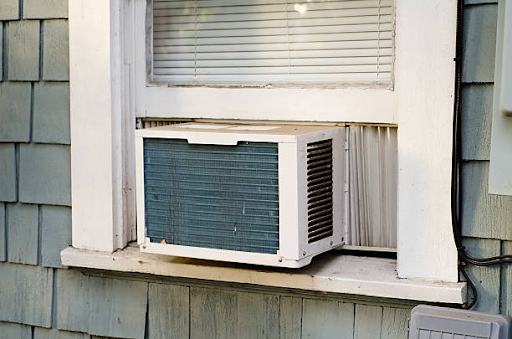
Here’s the problem: that efficiency number is mediocre. Window units typically have a CEER rating of 8.5 to 10.2. That’s significantly less efficient than the modern mini-split systems running at 18+ SEER2 or central air systems running at 13+ SEER2. A window unit consumes more energy per BTU of cooling delivered than any other option.
Over eight to ten years (the typical lifespan of a window unit), you’ll replace it twice. You’ll also pay roughly $9,600 to $12,000 in electricity costs for that window unit, assuming consistent summer usage. Now add a second window unit for another room and another. The costs accumulate.
Window units also come with comfort compromises. They’re loud. They block a window. They deliver inconsistent cooling (the room near the unit is cold, the far side stays warm). They only work in that one room. If you move to a different house, you might not have a window that fits the unit. They don’t provide heating. And they don’t qualify for any federal energy tax credits.
Window units make sense for one specific scenario: you need to cool exactly one room, you’re renting and can’t modify the unit, you have a small budget, or you’re in a temporary situation. Otherwise, they’re a short-term solution that costs more long-term.
Mini-Splits: The Modern Approach That Most Homeowners Don’t Know About
A mini-split is what happens when engineers remove the ductwork from air conditioning and ask what’s actually needed. The answer is surprisingly simple: you only cool the rooms you’re using, with individual temperature control in each space.
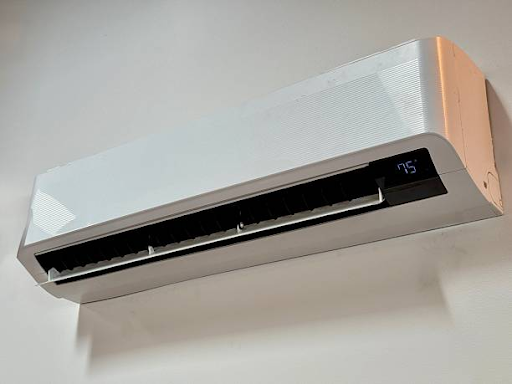
Here’s how it works: An outdoor unit sits outside your home (similar to a central AC condenser). From that unit, thin refrigerant lines and a small electrical cable run through a small hole in your wall to an indoor air handler mounted on the wall. That handler delivers the cooled air to the room. You can have one, two, three, or up to eight indoor units connected to the single outdoor unit, each with its own thermostat.
The upfront cost is higher. A single-zone mini-split (one outdoor unit, one indoor handler) installed in your home costs $2,500 to $4,000. A two-zone or three-zone system costs $5,000 to $8,000. This is roughly 30 percent more expensive than installing a comparable central air system with existing ductwork.
But here’s what changes the math: mini-split systems operate at 18 to 35 SEER2 efficiency, which is substantially higher than central air. They eliminate the 30 percent energy loss that happens when cool air travels through ducts. They allow you to set different temperatures in different rooms, so you’re not cooling empty bedrooms or unused spaces. Over fifteen to twenty years (a mini-split’s lifespan), these efficiency advantages translate to lower monthly electric bills.
Mini-splits offer another major advantage beyond cooling. Many systems also provide heating, allowing a single unit to deliver year-round comfort. A heat pump mini-split operates far more efficiently than traditional electric baseboard heating and can significantly reduce winter energy costs in many homes.
If you install a heat pump mini-split, you have both cooling and heating in one system. That doubles the value proposition. And you become eligible for the federal Inflation Reduction Act tax credit, which offers up to $2,000 back on qualifying heat pump installations.
The downside is that the indoor units are visible on your walls. Some people love them. Some hate them. It’s a design choice. You also need monthly filter cleaning to maintain efficiency. And if your home has multiple separate areas that need cooling, you’ll pay for multiple zones, which increases cost.
Mini-splits are the right choice if you have a room addition without ductwork, if you want zone control and heating, if you want the highest efficiency possible, or if your home doesn’t have existing ductwork and you want to avoid the $15,000 to $18,000 cost of installing new ducts for central air.
The upfront cost is higher. A single-zone mini-split (one outdoor unit, one indoor handler) installed in your home costs $2,500 to $4,000. A two-zone or three-zone system costs $5,000 to $8,000. This is roughly 30 percent more expensive than installing a comparable central air system with existing ductwork.
But here’s what changes the math: mini-split systems operate at 18 to 35 SEER2 efficiency, which is substantially higher than central air. They eliminate the 30 percent energy loss that happens when cool air travels through ducts. They allow you to set different temperatures in different rooms, so you’re not cooling empty bedrooms or unused spaces. Over fifteen to twenty years (a mini-split’s lifespan), these efficiency advantages translate to lower monthly electric bills.
Mini-splits offer another major advantage beyond cooling. Many systems also provide heating, allowing a single unit to deliver year-round comfort. A heat pump mini-split operates far more efficiently than traditional electric baseboard heating and can significantly reduce winter energy costs in many homes.
If you install a heat pump mini-split, you have both cooling and heating in one system. That doubles the value proposition. And you become eligible for the federal Inflation Reduction Act tax credit, which offers up to $2,000 back on qualifying heat pump installations.
The downside is that the indoor units are visible on your walls. Some people love them. Some hate them. It’s a design choice. You also need monthly filter cleaning to maintain efficiency. And if your home has multiple separate areas that need cooling, you’ll pay for multiple zones, which increases cost.
Mini-splits are the right choice if you have a room addition without ductwork, if you want zone control and heating, if you want the highest efficiency possible, or if your home doesn’t have existing ductwork and you want to avoid the $15,000 to $18,000 cost of installing new ducts for central air.
Central Air: The Standard That Works Well When You Have Ducts
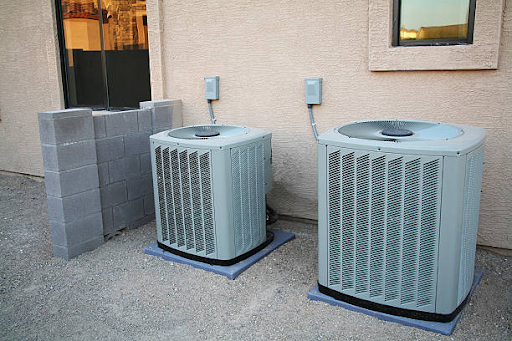
Central air conditioning is the most common cooling system in America because it works. One outdoor condenser unit. One indoor evaporator coil in a central location (usually a basement or utility closet). Ductwork delivers cool air to every room. Simple. Consistent. Familiar.
If your home already has ductwork from an existing system, central air is the most economical choice to install. A quality 3-ton central air system with professional installation runs $6,000 to $10,000 in Fayetteville. That’s less expensive than a comparable multi-zone mini-split. The system delivers consistent temperature throughout your home. You set one thermostat, and every room reaches that temperature.
Modern central air systems operate at 13+ SEER2, which is respectable. They cool homes efficiently. For larger homes, especially newer construction with good insulation and sealed ductwork, central air delivers whole-home comfort at lower cost than mini-split zones.
The catch: the ductwork itself is a liability. Central air systems lose approximately 30 percent of cooling energy through leaks and inefficiency in the ducts. If your ducts are old, poorly sealed, or run through unconditioned spaces like an attic, that loss is even worse. You’re also cooling rooms that are empty or closed off, which wastes energy.
If your home doesn’t have ducts (older homes, historic properties, homes built before widespread duct adoption), central air requires installing an entire ductwork system. This costs $12,000 to $18,000 on top of the AC unit cost. Suddenly, central air becomes expensive. In these cases, mini-splits make far more sense.
Central air is the right choice if you have existing ductwork, if you want a whole-home consistent temperature, if you have a larger home where zone control isn’t necessary, or if your primary concern is upfront installation cost.
Direct Comparison: Window Unit vs. Mini-Split vs. Central Air
Here’s how the three stack up across key factors:
Factor | Window Unit | Mini-Split | Central Air |
Upfront Cost | $400-$700 | $2,500-$8,000 | $6,000-$18,000 (with ducts) |
Efficiency Rating | 8.5-10.2 CEER | 18-35 SEER2 | 13-18 SEER2 |
Annual Operating Cost | $1,200-$1,500 | $400-$700 | $600-$1,000 |
Lifespan | 8-10 years | 15-20 years | 15-20 years |
Room Coverage | Single room | 1-8 zones (individual control) | Whole home (one temperature) |
Heating Capability | No | Yes (heat pump models) | No (separate furnace needed) |
Federal Tax Credit | None | Up to $2,000 | None |
Noise Level | 50-60 dB | 40-50 dB | 40-50 dB |
Installation | DIY possible | Professional required | Professional required |
Visible Units | Window-mounted | Wall-mounted handlers | Hidden (basement/closet) |
Ductwork Required | No | No | Yes (or very expensive) |
The table tells the real story. Window units have a low barrier to entry but high lifetime costs. Mini-splits cost more upfront but pay for themselves through efficiency and last twice as long. Central air is affordable if you have ducts but expensive if you don’t.
Understanding Your Home’s Ductwork Situation
The single most important factor in deciding between mini-split and central air is whether your home already has ductwork.
If your home was built before 1980 or is a historic property, it probably has no ducts. Central air installation would require cutting walls, running ducts through ceilings and attics, and sealing the entire system. This is expensive, disruptive, and often impractical. In these homes, mini-splits are the obvious choice. No construction. No wall cutting. Just a small hole for the refrigerant line and an outdoor unit.
If your home was built after 1985 or already has a heating system with ducts, you have ductwork. Central air installation is simpler and less expensive. You can use or modify existing ducts, or run new ducts through established pathways. In these homes, central air becomes economically attractive.
For homes in the transition period (1980-1985), you might have older ductwork that’s leaky and inefficient. Before committing to central air, have a contractor perform a duct leakage test. If your existing ducts are losing 20 percent or more to leaks, mini-splits might deliver better efficiency and comfort despite higher upfront cost.
Making Your Decision
You now have the information to choose. Here’s the decision framework:
If you need to cool one room urgently and affordably, get a window unit. Understand it’s a temporary solution that will be replaced.
If your home lacks ductwork, if you want heating and cooling in one system, if you want to take advantage of the federal tax credit, or if you want individual room temperature control, choose a mini-split. Professional AC installation of a mini-split takes days, not weeks. You’ll see energy savings within the first month and federal tax credits within the tax year.
If your home has existing ductwork, if you want a whole-home consistent temperature, if you have a larger home, or if upfront cost is your primary constraint, choose central air. Modern systems operate efficiently and require minimal ongoing maintenance.
Don’t let any contractor pressure you into a system that doesn’t fit your home. A good HVAC contractor in Fayetteville will ask about your home’s ductwork, your cooling needs by room, your budget, and your long-term plans before recommending anything. If they skip those questions and jump straight to a sales pitch, find someone else.
The True Long-Term Cost: Don’t Ignore the Full Picture
The most common mistake homeowners make is focusing only on upfront cost. A $400 window unit feels cheaper than a $4,000 mini-split until you realize you’re paying $1,200 per year to operate the window unit while the mini-split costs $400 annually.
Over fifteen years:
- Window units: $700 upfront × 2 replacements = $1,400 in equipment, plus $18,000 in electricity = $19,400 total
- Mini-split: $4,000 upfront plus $6,000 in electricity over fifteen years = $10,000 total (minus $2,000 tax credit = $8,000 net)
- Central air with existing ducts: $8,000 upfront plus $9,000 in electricity over fifteen years = $17,000 total
The mini-split is not the most expensive option over time. It’s the most cost-effective. Don’t let the sticker shock fool you.
If you’re ready to move beyond window units and want to explore which system makes sense for your Fayetteville home, request an HVAC estimate from a contractor who will actually measure your home and discuss your needs rather than guessing. The decision should be based on your home’s characteristics and your actual situation, not on generic advice.
FAQs
Is a mini-split the same as a heat pump?
Many modern mini-splits are heat pumps, meaning they can both cool and heat your home. But not all mini-splits are heat pumps, and not all heat pumps are mini-splits. A mini-split is a ductless cooling (or heating-cooling) system. A heat pump is an energy-efficient heating and cooling technology that can be delivered as a mini-split, central air system, or window unit. Ask your contractor specifically whether the model they’re recommending includes heat pump capability.
Can I install a mini-split myself?
Absolutely not. Even though the installation looks simple (run refrigerant lines, mount a box, plug it in), the refrigerant system requires EPA certification. Improper charging, connection, or sealing can damage the system and void the warranty. You must hire a licensed HVAC contractor.
Will my electric bill decrease if I switch from window units to a mini-split?
Likely yes, especially if you’re running multiple window units. A mini-split typically costs $400 to $700 annually to operate compared to $1,200 per unit for window AC. If you currently have two window units running, switching to a two-zone mini-split cuts your cooling costs roughly in half. That payback happens in 3-4 years.
Do mini-splits work well in hot, humid climates like North Carolina?
Yes. Mini-splits handle heat and humidity well because they run efficiently at high outdoor temperatures. Testing at 95°F outside showed mini-splits maintaining 18+ SEER2 while window units dropped to 8-10 CEER. The efficiency gap widens in extreme heat, making mini-splits even more valuable in humid Southern climates.
What if my home is too large for one mini-split?
You can install a multi-zone system. One outdoor unit can serve up to eight indoor handlers. A three or four-zone system effectively covers a typical three to four-bedroom home with individual temperature control in each zone. The cost scales, but so does the efficiency benefit and comfort.
Can I replace just the outdoor central air unit and keep my ducts?
Yes, and this is often the right move if you have old central air with good existing ductwork. A new outdoor condenser with your existing ducts will operate at modern SEER2 efficiency. The retrofit installation is simpler and less expensive than installing new ductwork or removing the existing system.
