
Your AC Doesn't Make Cold Air. It Removes Heat. Here's Why That Matters
Most homeowners picture an air conditioner as a machine that creates cold air and pumps it through the house. That assumption sounds logical, but it is not actually how air conditioning works. An AC system does not manufacture coldness. Its real job is removing heat from inside your home and transferring that heat outdoors.
That difference matters far more than most people realize. It explains why oversized systems often cool poorly despite running powerfully, why humidity can still feel uncomfortable even when the thermostat says 70 degrees, and why regular maintenance has such a direct impact on performance and energy bills.
Once air conditioning is understood as a heat-removal process instead of a cold-producing one, many of the confusing parts of HVAC systems suddenly make a lot more sense.
The entire system revolves around heat transfer. Refrigerant absorbs heat from indoor air, carries it outside, and releases it outdoors before repeating the cycle again and again. When airflow becomes restricted, coils get dirty, refrigerant levels drop, or systems are improperly sized, that heat removal process starts breaking down.
This is also why climate matters so much. A lower-end AC system might cool adequately in a dry, mild climate, yet struggle badly in humid areas like North Carolina where removing moisture becomes just as important as lowering temperature. Understanding how your AC actually works helps explain why sizing, efficiency, airflow, humidity control, and maintenance all play such a major role in comfort and long-term system performance.
Key Takeaways
- Your AC moves heat outside, not inside, through refrigerant absorbing warmth and expelling it outside.
- Oversized systems cool too fast, preventing adequate moisture removal and leaving homes feeling damp inside.
- Humidity removal requires sufficient heat absorption time. Fast cooling stops dehumidification before the process completes.
- Dirty coils and clogged filters restrict heat absorption, forcing systems to run much longer continuously.
- Maintenance directly impacts heat removal efficiency. Clean coils and clear airflow determine system effectiveness overall.
The Misconception That Costs You Money
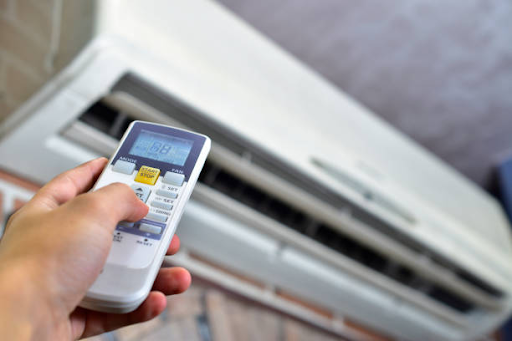
There’s a specific moment when people’s mental model of air conditioning breaks. You turn on your AC. You feel the cool air flowing from the vents. Your brain says, “The machine is making cold air.” This feels so obvious that most people never question it. But here’s what’s actually happening:
Your AC isn’t cold. Your AC is removing heat from the air inside your home and pumping that heat outside.
Think about the implications. If your AC were really “making cold,” you could make a room arbitrarily cold by running a bigger machine. More powerful cold-making equals more cold, right? But that’s not how thermodynamics works. Your AC can only remove heat. The amount of heat it can remove per hour depends on the refrigerant cycle, the surface area of the coils, airflow, and how long the system runs. These constraints are real.
This matters because the difference between a “heat-making” model and a “heat-removing” model explains nearly every AC problem homeowners face.
An oversized system gets framed as “powerful.” But understanding that AC removes heat reframes oversizing as “too much heat-removal capacity for your home’s actual load,” which causes short-cycling and failures. A dirty coil doesn’t frame as “clogged,” which sounds like a minor maintenance issue. It frames as “reduced heat-removal capacity,” which explains why your system runs longer and costs more.
A humid home even with the AC running doesn’t mean the system is broken. It might mean the system is sized correctly for temperature control but not sized or maintained for proper humidity removal, which requires different thinking about heat extraction.
Once you understand the actual mechanism, the problems that seemed mysterious become obvious.
How Heat Removal Actually Works
Your air conditioning system uses a closed refrigerant loop that circulates through four main stages. Here’s how the process works:
Stage 1: Heat Absorption (The Evaporator Coil)
Warm air from your home is drawn into your indoor unit and blown across a cold evaporator coil. The refrigerant inside that coil is at a low pressure and low temperature, even colder than your thermostat’s set point. Because the coil is colder than the air passing over it, heat naturally flows from the air to the refrigerant.
The warmer air releases its thermal energy, becoming cooler. That cooler air flows back into your home. Meanwhile, the refrigerant absorbs that heat and evaporates from a liquid into a gas.
This is passive heat transfer. No magic. Just the second law of thermodynamics: heat flows from hot to cold.
Stage 2: Compression
The gas refrigerant flows to the outdoor unit where it enters a compressor. The compressor pressurizes the gas, which raises its temperature significantly. Now the refrigerant is hotter than the outdoor air.
Stage 3: Heat Rejection (The Condenser Coil)
The hot, pressurized refrigerant flows through the outdoor condenser coil. The outdoor air, being cooler than the pressurized refrigerant, allows heat to flow from the refrigerant to the outside air. As the refrigerant cools, it condenses back into a liquid. This is where the heat your home had is finally expelled outside. A fan blows outdoor air over the condenser coil, accelerating this heat transfer.
Stage 4: Expansion
The liquid refrigerant flows through an expansion valve, where it loses pressure. This pressure drop causes it to cool significantly, and the cycle starts over. The cool liquid re-enters the evaporator coil to absorb heat from your home again.
This cycle runs continuously. The refrigerant acts as a heat shuttle, moving thermal energy from inside to outside using the pressure and phase changes of a special fluid.
Your AC doesn’t create a cold. It continuously moves heat. The efficiency of that heat movement depends on coil surface area, airflow, temperature differential, and system runtime.
Why This Reframes Everything About Sizing
The “heat removal” model immediately explains why system sizing matters so much, and why the common practice of oversizing is a disaster.
Suppose your home needs the removal of 36,000 BTU of heat per hour to maintain comfort on the hottest day of summer. A contractor sizes you a 3-ton system (36,000 BTU capacity). This system should run roughly 60 to 70 percent of the day on that peak day, cycling on and off as your home reaches set temperature.
Now suppose that same contractor oversizes you to a 4-ton system (48,000 BTU capacity) to be “safe.” On peak day, that system removes 48,000 BTU per hour. It reaches your set temperature far too fast. The thermostat signals the system to shut down after only 5 to 7 minutes.
Here’s where understanding heat removal becomes critical: HVAC system maintenance requires adequate runtime to remove humidity (latent load) effectively. Your home has two types of cooling load. Sensible load is temperature. Latent load is moisture. An undersized or poorly functioning system reaches temperature targets quickly but hasn’t run long enough to remove moisture. Your home feels cool but clammy.
The oversized system cools so fast that the thermostat shuts it down before humidity removal is complete. Same problem. “Cool and clammy” is the signature feeling of a system that removes temperature quickly but can’t remove heat efficiently enough to also dehumidify.
A correctly sized system runs long enough to remove both temperature and moisture. It cycles on and off appropriately, staying on long enough to do the job but not so long that it wastes energy.
Oversizing wastes money in another way: the system cycles 8 to 10 times per hour instead of 2 to 3 times. Every time it starts, the compressor surges with high current draw. The contacts, capacitors, and relays experience stress. Over time, the system fails prematurely.
This only makes sense when you understand that your AC removes heat. Oversizing means excessive heat-removal capacity for the load, which causes the system to achieve its objective too fast and shut down before fully addressing all of the thermal load (including humidity). The solution is proper sizing through load calculation, not buying the biggest unit available.
The Maintenance Connection: Clean Coils Are Heat-Removal Coils
Once you understand that your AC removes heat by transferring it across coil surfaces, maintenance becomes obvious rather than optional.
A clean evaporator coil transfers heat efficiently from air to refrigerant. A dirty coil covered in dust, pollen, and mold transfers heat poorly. The same air passing over the dirty coil spends less time in contact with cold metal, so less heat is absorbed. The system must run longer to achieve the same cooling effect.
Longer runtime equals higher energy costs. Longer runtime also means more wear on the compressor and fan motors. A dirty coil is not a cosmetic problem. It’s a heat-removal efficiency problem that directly impacts your electric bill and system lifespan.
The same logic applies to your air filter. A clogged filter restricts airflow. Slower airflow means air spends more time over the coil, which sounds beneficial, but actually it means air stagnates, coil temperatures don’t drop as effectively, and dust accumulates faster. The system can’t remove heat as efficiently.
This is why professional AC installation and regular maintenance are not optional upgrades. They’re fundamental to how the system performs its actual job: heat removal.
Why Humidity Lingers (and What It Reveals)
The most common complaint about air conditioning is that the system cools the air to the set temperature, but humidity remains high. The home feels uncomfortable despite what the thermostat says. This happens for three reasons, all related to heat removal.
First, the system might be oversized and short-cycling, as discussed above. It cools the sensible load (temperature) too fast and shuts down before completing the latent load (humidity removal).
Second, the system might not have enough runtime to remove humidity. Your home is at 75 degrees inside and 95 degrees outside. The system cools it to 72 degrees in 20 minutes. Humidity removal requires longer operation. If the thermostat is set to 72, the system stops before removing enough moisture.
Third, the air filter or evaporator coil might be dirty, reducing heat transfer efficiency. The system can’t remove heat effectively, so it runs longer, but the reduced capacity means it still doesn’t remove as much humidity as it should.
All three scenarios boil down to the same problem: insufficient heat removal performance relative to both temperature and humidity loads. When you reframe the problem as “my system isn’t removing enough heat to also handle humidity,” the solution becomes clear. You need better heat-removal capacity (through proper sizing), longer runtime (through better coil efficiency), or both.
Making the Connection to Your AC Decision
When you’re facing an AC replacement or repair, the heat-removal model changes how you should think about your options.
A cheap, lower-efficiency system removes the minimum heat required to survive hot weather. It runs constantly on peak days. Your electric bill is high. A high-efficiency system removes the same amount of heat more effectively, so it runs less and costs less to operate.
A poorly installed system with undersized ductwork or bad airflow doesn’t deliver heat removal efficiently. The coil can absorb heat, but air can’t flow over it properly, so the system underperforms.
A system without proper maintenance loses heat-removal capacity over time. By year 5 of no service, the coil is dirty, the filter is clogged, the drain line is sluggish. The system that was once appropriately sized is now undersized relative to its degraded capacity.
Understanding heat removal means understanding that your AC decision isn’t about “how much cold does the machine make” but about “how effectively does this system remove heat from my home.” That changes which questions you ask when getting professional AC installation and repair quotes.
You should ask:
- What’s the cooling capacity relative to my home’s actual load?
- What’s the system efficiency rating?
- Is the contractor performing a load calculation or just guessing?
- How accessible are the coils for maintenance?
- What happens to performance if the filter gets dirty or the coil gets clogged?
These questions don’t make sense if AC is a “cold-making machine.” They make perfect sense if AC is a “heat-removal machine.”
What This Means for Your Next Service Call
When you contact our HVAC team or schedule HVAC service, you now have a mental model that explains what they’re actually doing.
A technician cleaning your evaporator coil is restoring heat-removal capacity. When they tell you to replace your air filter, they’re telling you to restore airflow so heat removal is optimal. When they suggest a maintenance plan, they’re protecting your system’s ability to remove heat effectively over time.
At A/C Man Heating & Air Conditioning, we serve Fayetteville and surrounding areas with a focus on systems that remove heat properly. Proper heat removal means comfortable homes, lower energy bills, and systems that last. Whether you need residential HVAC services or a new AC system estimate, we start by understanding your home’s actual heat removal needs, not by selling you the biggest system available.
If you’re ready to think about your AC differently and have a system that removes heat efficiently, that conversation starts with understanding what your system is actually supposed to do. It’s not cold. It’s removing heat. And when you get that right, everything else follows.
FAQs
If AC doesn’t make you cold, what exactly is “cold”?
Cold is the absence of heat. It’s not a substance. Your AC doesn’t produce an absence of heat. It removes the heat that’s present, which makes the remaining air feel cooler by comparison. In physics terms, we measure this as temperature, which is the kinetic energy of molecules. Your AC removes thermal energy, lowering that kinetic energy, which we perceive as cold.
Why does my AC work better in spring than summer if it’s the same machine?
In spring, your outdoor temperature is 70 degrees. Your AC’s heat rejection (condenser) is much more efficient because the temperature differential between the hot refrigerant and outdoor air is large. Heat flows easily from hot to cold. In summer, the outdoor temperature is 95 degrees. The differential is smaller. Heat transfer becomes less efficient. Your system has to work harder to reject the same amount of heat outside. This is why AC systems are less efficient in extreme heat, despite being the same machine.
Does understanding heat removal mean my oversized system is actually okay?
No. Oversizing is still a problem, and understanding heat removal explains why. Yes, an oversized system will cool your home, but it removes heat too fast, causing short cycling, poor humidity control, and accelerated wear. The system is not operating at its design point. It’s burning through on-off cycles, stressing components. Understanding that AC removes heat makes oversizing’s downsides even more obvious.
Can a system that’s too small for heat removal be fixed?
Yes, partially. If your system is undersized relative to your home’s actual load, you have three options. One: replace it with properly sized equipment. Two: improve your home’s insulation and air sealing to reduce the heat load. Three: manage your expectations about comfort on peak days. You can also improve efficiency through maintenance, which helps but doesn’t solve an undersizing problem.
Does understanding heat removal change how I maintain my system?
Yes. Instead of thinking “I’ll change my filter because it’s dirty,” you think “I’ll change my filter so airflow is optimal for heat removal.” Instead of “I’ll get the coils cleaned because they look gross,” you think “I’ll get the coils cleaned to restore heat-absorption efficiency.” The maintenance tasks are the same, but understanding the purpose changes your commitment level.
Why do some contractors not explain this?
Because explaining heat removal requires a technical conversation that makes some customers uncomfortable. It’s easier to sell “a bigger machine” than to explain heat removal capacity, load calculation, and efficiency. A contractor who takes time to explain the thermodynamic principles is prioritizing your understanding over quick sales. That’s worth paying attention to.
