
How Do You Reset a Heat Pump After a Power Outage?
Power outages can interrupt more than lights and internet. When electricity returns, many homeowners expect their heat pump to start running immediately. Instead, the system may stay quiet, blow air without heating or cooling, or seem completely unresponsive. This can feel like something broke during the outage.
In most cases, it did not. Heat pumps are designed with built in protections that delay restarts and prevent damage. Knowing how those protections work helps you reset the system correctly without causing additional issues.
In this guide, we will explain how to reset a heat pump after a power outage, why the system may not restart right away, and what steps help restore normal operation safely.
Key Takeaways
- Heat pumps often delay restarting after a power outage to protect internal components.
- Waiting several minutes after restoring power is a normal and necessary step.
- Repeated breaker resets or thermostat changes can cause more harm than good.
- Power outages can expose existing electrical or control issues in a heat pump.
- Ongoing restart problems usually require professional inspection and repair.
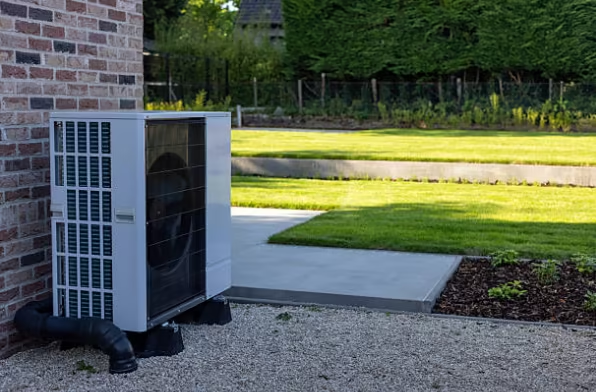
How Do You Reset a Heat Pump After a Power Outage?
To reset a heat pump after a power outage, turn the system off at the thermostat, check that the circuit breaker is fully on, wait several minutes to allow safety delays to clear, then turn the thermostat back on and give the system time to restart.
Heat pumps do not always restart instantly after power is restored. Many models include time delays that protect the compressor from electrical stress. These delays can last several minutes and may look like a malfunction when the system is actually operating as intended.
Why Heat Pumps Sometimes Do Not Restart After Power Loss
Heat pumps are sensitive to electrical fluctuations. When power is lost and restored, voltage can spike or fluctuate briefly. To protect internal components, manufacturers build in safeguards that prevent immediate restarts.
One of the most important protections is the compressor delay. The compressor should not restart under pressure immediately after shutdown. Allowing time for pressures to equalize reduces wear and prevents damage. Control boards also monitor power stability before allowing full operation to resume.
Because of these protections, a heat pump may appear inactive even though it is working through its normal restart sequence. Patience is often part of the reset process.
Step by Step: How to Reset a Heat Pump Safely
Following a clear sequence helps avoid unnecessary stress on the system and reduces the risk of further issues.
Step 1: Turn the Thermostat Off
Start by turning the thermostat completely off. This stops the system from trying to start while you check power and allows internal controls to reset properly.
Leave the thermostat off for several minutes. This pause helps clear any incomplete commands that may have occurred during the outage. It also ensures the system is not trying to cycle while power stability is being confirmed.
Step 2: Check the Circuit Breaker
Next, locate the circuit breaker that controls the heat pump. Power outages can trip breakers, even if the outage itself was brief.
Look for a breaker that is in a middle position or slightly out of alignment. Reset it by switching it fully off, then back on. Do this only once. Repeated resetting can damage electrical components.
If the breaker trips again immediately, stop and leave it off. This indicates an electrical issue that should be inspected by a professional.
Step 3: Restore Power and Wait
After confirming the breaker is on, wait. This step is often skipped, but it matters.
Heat pumps commonly have built in delays ranging from three to ten minutes. During this time, the system may appear inactive. This waiting period allows internal pressures to balance and control boards to complete startup checks.
Avoid adjusting the thermostat repeatedly during this time. Doing so can restart the delay and extend the wait.
Step 4: Turn the Thermostat Back On
Once enough time has passed, turn the thermostat back on and set it to the desired mode and temperature.
You may hear the indoor fan start first, followed by the outdoor unit. In some cases, there may be another brief pause before heating or cooling begins. This is normal.
If the system starts and runs steadily, the reset was successful.
What Not to Do After a Power Outage
Certain actions can make restart issues worse or create new problems.
Do not flip breakers on and off repeatedly. This increases electrical stress and can damage control boards.
Avoid rapidly changing thermostat settings. Jumping between heating, cooling, and off modes confuses system logic and resets internal timers.
Do not attempt to manually force the outdoor unit to start. Heat pumps rely on coordinated signals between components. Forcing operation bypasses safety controls and risks damage.
Patience and a calm, step by step approach are more effective than repeated attempts to restart the system.
Signs the Heat Pump Did Not Reset Properly
Sometimes a reset attempt does not resolve the issue. Certain signs suggest the system needs further attention.
If the heat pump remains completely unresponsive after waiting and following the reset steps, there may be a control or electrical problem.
Unusual noises during startup, such as loud humming or clicking without operation, can indicate electrical or compressor issues.
Short cycling, where the system starts and stops repeatedly, often points to sensor or control board problems that were triggered or exposed during the outage.
If the system blows air but does not heat or cool after extended operation, refrigerant flow or reversing valve issues may be involved.
These symptoms indicate that the problem goes beyond a simple reset.
Why Power Outages Can Reveal Existing Issues
In many cases, the outage does not cause the problem. It reveals one that already existed.
Weak capacitors, aging control boards, or loose electrical connections may function normally until power is interrupted. When electricity returns, those components fail to recover properly.
Outages also stress systems that are already operating near their limits. A reset issue after an outage often points to underlying wear rather than a one time event.
This is why repeated reset problems should not be ignored, even if the system eventually starts.
How Long Should You Wait Before Assuming There Is a Problem?
Waiting is part of the process, but there is a reasonable limit.
After restoring power and turning the thermostat back on, most systems should show signs of operation within ten minutes. In colder or hotter conditions, it may take slightly longer for heating or cooling to be noticeable.
If there is no response after fifteen minutes, or if the system behaves erratically, further attempts are unlikely to solve the issue. At that point, professional inspection is the next step.
Preventing Reset Problems After Future Outages
While outages cannot always be prevented, a few steps help reduce the chance of reset issues.
Keeping up with regular maintenance ensures electrical components and controls are in good condition. Clean connections, healthy capacitors, and updated control boards recover more reliably after power loss.
Using a surge protector designed for HVAC equipment can help protect sensitive electronics from voltage spikes when power returns.
Monitoring system behavior after outages helps catch small issues early before they become larger failures.
When to Call a Professional
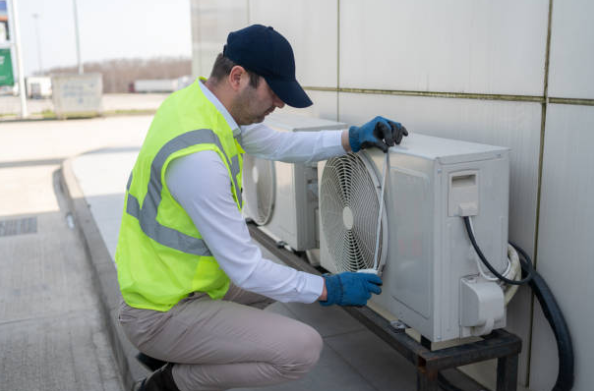
Professional service is needed if the heat pump does not restart after proper reset steps, if breakers trip repeatedly, or if unusual noises or short cycling occur.
Electrical testing, control board diagnostics, and refrigerant checks require specialized tools and training. Continuing to reset a system that is not responding correctly risks further damage.
If power outages have left your heat pump unreliable or unresponsive, a qualified HVAC technician can identify whether the issue involves electrical protection, control logic, or worn components that need attention.
Final Thoughts;
Resetting a heat pump after a power outage is often straightforward, but it requires patience and the right sequence. Turning the system off, checking the breaker, waiting for safety delays, and restarting carefully resolves many issues.
When a heat pump does not respond after these steps, the problem usually lies deeper than the outage itself. If repeated reset attempts fail or system behavior changes, A/C Man Heating and Air can inspect the system, identify the cause, and restore reliable operation without guesswork.
FAQs
How long should I wait for my heat pump to restart after a power outage?
Most heat pumps have built-in safety delays that last several minutes. In many cases, you should wait up to ten minutes after restoring power before assuming there is a problem.
Why does my heat pump turn on but not heat or cool after an outage?
This can happen if the system is still in a delay cycle or if a control or sensor issue was triggered during the outage. If the issue continues after waiting, service may be needed.
Can a power outage damage my heat pump?
A power outage itself usually does not cause damage, but voltage fluctuations when power returns can stress electrical components. This can reveal existing wear or trigger failures in aging parts.
Should I keep resetting the breaker if my heat pump does not start?
No, repeatedly resetting the breaker can damage electrical components. If the breaker trips again after one reset, leave it off and schedule professional service.