
Which Type of AC Is Best for Your Home in Fayetteville, NC?
Your neighbor just dropped $12,000 on a whole-home central system. Your coworker swears her three new ductless mini-splits cut her summer bill 40 percent. Someone on Nextdoor keeps insisting window units are still the smartest move. Every one of them thinks their answer is the right answer, and none of them are wrong for their situation. That is the whole problem.
In this guide, you will get an honest side-by-side of every AC type on the market in 2026, the scenarios each one actually fits, real installed costs for Fayetteville, and the decision framework A/C Man Heating and Air uses when a homeowner asks which type of AC is best for their specific home. Not a generic comparison. The local reality: what fits an older Haymount bungalow, a newer Cliffdale build, a 1970s ranch, or a mobile home outside Spring Lake.
Key Takeaways
- Central AC still fits most Fayetteville homes with existing ductwork in decent working condition.
- Heat pumps handle both cooling and heating in one unit, ideal for mild NC winters.
- Ductless mini-splits win when there is no ductwork or one room stays uncomfortable.
- Window and portable units cost less upfront but run 30 to 50 percent less efficient.
- Packaged AC systems fit mobile homes and small footprints without attic or crawl space.
The 6 Types of Home AC Systems at a Glance
Every home cooling option in 2026 falls into one of six categories. Here is the quick comparison before you go deeper into any single one:
AC Type | Best For | Efficiency Range | Installed Cost | Lifespan |
Central AC | Whole-home, existing ducts | 14 to 26 SEER2 | $5,500 to $12,000 | 15 to 20 years |
Heat Pump | Cooling plus heating in one | 14 to 30+ SEER2 | $6,000 to $14,000 | 15 to 20 years |
Ductless Mini-Split | No ducts, zone control | 18 to 35+ SEER2 | $3,500 to $20,000 | 20+ years |
Window AC | Single room, budget | 10 to 15 CEER | $150 to $700 | 8 to 10 years |
Portable AC | Temporary, renters | 6 to 10 CEER | $300 to $700 | 5 to 8 years |
Packaged AC | Mobile homes, small footprint | 14 to 16 SEER2 | $3,800 to $7,000 | 12 to 15 years |
The right choice depends on your home’s layout, whether ducts exist, your heating source, and how you actually use the space. The sections below break down when each one actually wins.
Central AC: The Fayetteville Default
Central AC is what most Fayetteville homes built after 1970 already have. The system pairs an outdoor condenser with an indoor evaporator coil mounted on top of a gas furnace or air handler, and it distributes cooled air through ducts to every room. When it works, it works quietly and evenly.
Central AC wins when your ductwork is under 15 years old and reasonably sealed, you have one main climate zone with similar usage patterns across the house, and you already use gas heat or plan to. Modern 16 to 20 SEER2 units cool a 2,000-square-foot home for roughly $150 to $250 a month in peak Fayetteville summer, depending on set point.
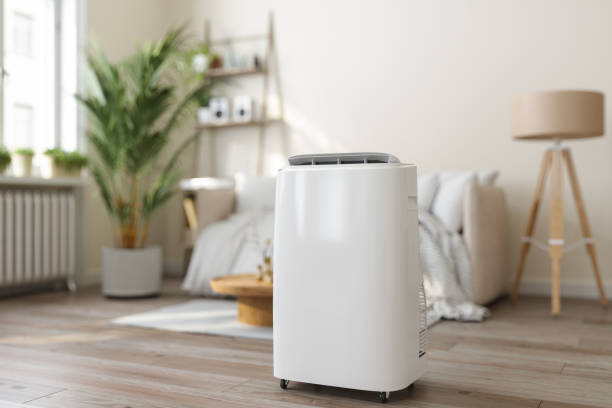
The catch: central AC only cools the whole house at one temperature. If your bonus room stays 5 degrees hotter than the living room, central cannot fix that without expensive duct rework. Older systems that were installed with poorly designed ductwork lose 20 to 40 percent of their conditioned air into attics and crawl spaces, which shows up on the power bill every month.
Installed cost for a full central AC replacement in Fayetteville runs $5,500 for a basic 14 SEER2 unit up to $12,000 for a premium variable-speed 20 SEER2 system with a new coil and thermostat. If your ducts need replacement too, add $2,500 to $6,000. For most homeowners deciding whether to repair or replace, a licensed ac repair technician can price both paths side by side after a full diagnostic.
Heat Pump: The One System That Handles Both Cooling and Heating
Heat pumps are the strongest all-around choice for Fayetteville, NC. A heat pump works exactly like a central AC in summer, but reverses in winter to pull heat from outdoor air and push it into the house. One system, one outdoor unit, both heating and cooling.
According to Consumer Reports’ heat pump buying guide, modern cold-climate heat pumps run efficiently down to about 5°F, which is far below anything Fayetteville sees in a typical winter. In this climate, heat pumps often eliminate the need for a separate gas furnace entirely.
The efficiency case is strong. Because a heat pump moves heat rather than generating it, running the heating side can use roughly 50 percent less electricity than baseboard or electric-furnace heat. The cooling side matches or beats a comparable central AC on SEER2. Modern variable-speed heat pumps also handle humidity better than single-stage AC units, which matters in Fayetteville’s 72 to 77 percent summer humidity.
Installed cost for a heat pump replacement runs $6,000 to $14,000. Federal tax credits, state rebates through Energy Saver North Carolina, and utility incentives can bring qualifying installs down significantly. For homes considering replacing both an aging AC and furnace, a heat pump is usually the more cost-effective single replacement. A heat pump service consultation can confirm sizing and rebate eligibility for your specific address.
Ductless Mini-Split: When Central Doesn’t Fit
Ductless mini-splits pair one outdoor condenser with one to five indoor wall or ceiling heads, connected by slim refrigerant lines run through a 3-inch hole in the wall. No ducts. No trunk lines. Every zone runs on its own thermostat.
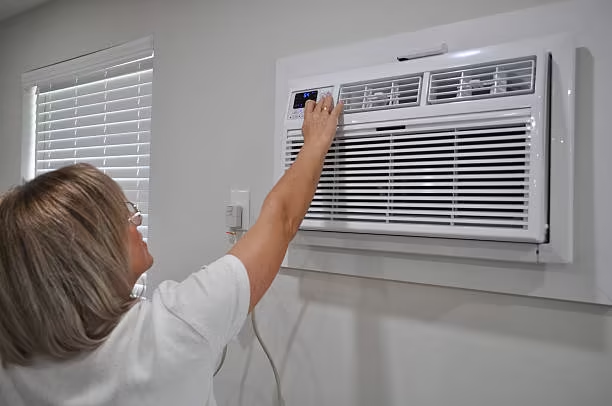
Ductless wins in three specific scenarios: your home has no ductwork (common in Fayetteville homes built before 1960), one room never stays comfortable no matter what the central system does, or you added a bonus room, sunroom, or garage conversion the main system was never sized for. A single-zone install runs $3,500 to $5,500 in Fayetteville. A multi-zone system with three to five heads runs $9,000 to $20,000 depending on tier.
The efficiency ceiling is the highest of any AC type. Premium models reach 35 SEER2 with inverter-driven variable-speed compressors that hold a steady temperature instead of cycling on and off. That efficiency plus zone control cuts energy use 25 to 40 percent compared to a comparable central system in the same house.
The trade-off: indoor heads are visible on the wall or ceiling, and per-zone cost runs higher than central AC when scaled to a whole house. For homes where central AC fits well, central still wins on price. A ductless mini-split installation makes more sense when the central path involves major retrofit work.
Window AC: The Cheap Fix and What It Actually Costs
Window units are the cheapest cooling money can buy: $150 for a small 5,000 BTU unit up to $700 for a 24,000 BTU unit that can handle a large living area. They install in an hour, plug into a standard outlet (larger units need 240V), and start cooling immediately.
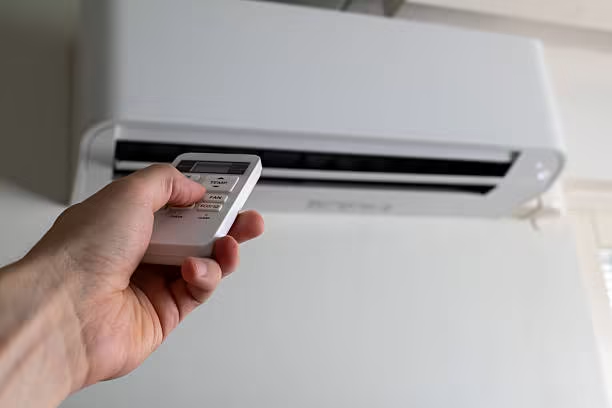
Where they hurt you: a window unit cools one room, blocks a window, and typically runs at 10 to 15 CEER, which is roughly half the efficiency of a mid-range central system. Cooling four rooms with four window units in a Fayetteville summer often costs more per month than running one central AC in the same house.
Window units also come with real trade-offs most buyers underestimate. The window they occupy is unusable, security is compromised (a determined intruder can push a window unit inward), and rain intrusion around bad seals is a common source of interior water damage. Modern designs are quieter than they were 15 years ago, but a window unit next to a bedroom is still noisier than a central system.
Window units make sense in three narrow scenarios: renters who cannot install a permanent system, homeowners who only need to cool one room seasonally (like a workshop or guest room), or emergency backup when a central system fails during a July heat wave.
Portable AC: What You Actually Get for the Money
Portable AC units are the least efficient cooling option on this list, and it is not close. The most common portable AC runs at a CEER of 7.9, while the most common window unit runs at 12. That efficiency gap translates directly to a 30 to 50 percent higher monthly power bill for the same amount of cooling.
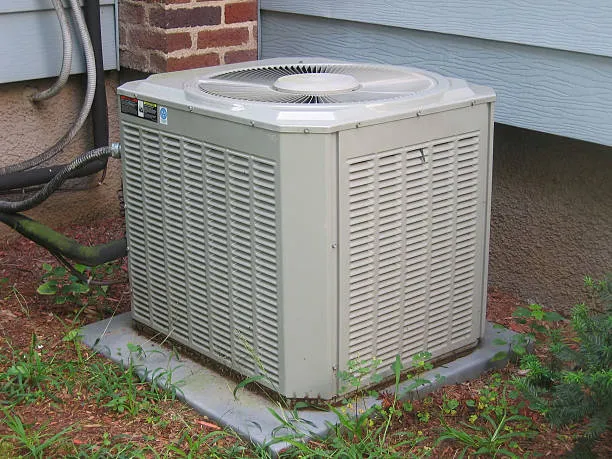
Real cooling output also runs about 30 percent below the stated BTU rating. A 12,000 BTU portable AC delivers roughly the same actual cooling as an 8,000 BTU window unit, at 40 to 60 percent higher operating cost. The exhaust hose that has to run out a window creates negative pressure inside the room, which pulls hot outdoor air in through every gap in the building envelope, making the room fight itself.
Portable AC units make sense when you cannot install a window unit (some HOAs, historic districts, or upper floors), you need cooling for a limited time (a few weeks of a heat wave, a temporary situation), or you rent and any permanent install is off the table.
For any long-term cooling in a Fayetteville home, portable AC is almost always the wrong answer. Even a window unit will save money within one summer of use.
Packaged AC: For Homes Without an Attic or Crawl Space
Packaged AC systems combine the condenser, evaporator coil, and blower in one outdoor cabinet, usually mounted on a concrete pad next to the house or on the roof. Air ducts run directly into the home from that single unit. This design is common in mobile homes, manufactured housing, small footprint homes, and any structure without space for a separate indoor air handler.
Packaged units come in AC-only, heat pump, and gas/electric configurations. Installed cost runs $3,800 to $7,000 for a mobile home installation, which usually includes the ground pad, ductwork transition, and electrical work. Efficiency runs 14 to 16 SEER2 for most residential packaged systems.
The upside: simpler installation with one cabinet to service and no indoor unit taking up closet or attic space. The downside: everything sits outdoors, so weather exposure, corrosion, and animal intrusion (rodents in the cabinet) are recurring issues in Fayetteville’s humid climate. Lifespan runs 12 to 15 years, shorter than a split system.
Packaged systems make sense specifically for mobile homes, older bungalows without an attic, and small ADUs where a full split system will not fit. For any home with attic space and existing ductwork, a split system is usually the better long-term choice.
How to Decide Which Type of AC Is Best for Your Fayetteville Home
The right AC depends on four things: your home’s layout, your existing equipment, your climate needs, and your budget horizon. Match your situation to one of these scenarios:
- You have working ductwork under 15 years old → Central AC or a central heat pump. Skip ductless. Match the SEER2 to your budget and how long you plan to stay in the home.
- You have no ductwork or plaster walls that make installing ducts a mess → Ductless mini-split, single or multi-zone based on how many rooms need cooling.
- You have working ducts but one or two rooms never cool right → Keep the central system, add a ductless mini-split to the problem rooms. Best of both.
- Your gas furnace is also aging and you want one system for cooling and heating → Heat pump. NC’s mild winters make this the strongest efficiency play.
- You live in a mobile home or a small footprint house without attic space → Packaged AC system. Match capacity to home size and consider a heat pump packaged unit for heating too.
- You rent, cannot modify the property, or need temporary cooling → Window AC first, portable AC only if window installation is not possible.
- Your primary need is emergency backup or a single-room comfort boost → Window AC for permanent installs, portable AC only for short-term.
Whichever direction you lean, get a Manual J load calculation from a licensed contractor before you buy. An oversized system in Fayetteville’s humid climate short-cycles, fails to remove humidity, and wears out faster than a correctly sized unit.
What Fayetteville Homes Typically End Up With
The distribution shakes out predictably across Fayetteville. Homes built 1980 through 2020 with working ducts almost always end up with central heat pumps or central AC plus gas furnace combos. Older homes in Haymount, downtown, or the pre-1950 stock frequently move to ductless mini-splits because the retrofit math works out better than tearing plaster.
Homes with problem rooms (upstairs bonus rooms over garages, additions off the back, converted attics) usually add a single-zone ductless head instead of oversizing the central system to compensate. The two-system approach cools the problem room properly and stops overcooling everywhere else.
Mobile homes and manufactured housing across Spring Lake, Hope Mills, and Fort Bragg lean toward packaged heat pump units for the single-cabinet simplicity and no-attic install. According to Weather Spark’s Fayetteville climate data, the city hits 90°F on roughly 83 days per year while winter lows rarely drop below 25°F, which makes heat pumps the most efficient single-system choice for the majority of local homeowners.
Window units still show up in rentals, workshops, garage apartments, and any situation where a permanent install is not on the table. Portable units are almost exclusively used for temporary situations.
Choosing the Right AC for Your Fayetteville Home
The best AC for your home is not the most expensive one or the trendiest one. It is the one that fits your home’s specific ductwork situation, matches Fayetteville’s actual climate load, and pays back its efficiency premium during the years you will live in the house.
For most Fayetteville homeowners with working ductwork, a mid-tier central heat pump in the 18 to 22 SEER2 range hits the best value point. For homes with no ducts or persistent problem rooms, a ductless mini-split solves the actual problem instead of throwing more central-system capacity at it. For mobile homes and small footprints, packaged heat pumps make life simpler.
The wrong path is picking a system based on marketing tier or your neighbor’s install. Every home has a different envelope, a different duct condition, a different orientation to the afternoon sun, and a different heating source. A proper load calculation and equipment recommendation from a licensed HVAC contractor takes 60 to 90 minutes and saves years of poor comfort and inflated power bills.
If you want to work through your specific home with someone who has installed every one of these AC types across Fayetteville and knows the trade-offs by street and neighborhood, A/C Man Heating and Air will run the load calc, show pricing on multiple options side by side, and let you decide with the full picture. Call (910) 797-4287 or get in touch with the team to schedule the visit.
FAQ
Which type of AC is most energy efficient for a Fayetteville home?
A variable-speed ductless mini-split hits the highest SEER2 rating (up to 35), but a modern variable-speed central heat pump usually wins on whole-home efficiency for homes that have good ductwork. The best choice depends on whether ducts already exist and are sealed properly.
How much does it cost to install a new AC in Fayetteville, NC?
Central AC runs $5,500 to $12,000 installed, central heat pumps run $6,000 to $14,000, single-zone ductless runs $3,500 to $5,500, and packaged units for mobile homes run $3,800 to $7,000. Window and portable units run $150 to $700 as DIY installs, though they are not permanent solutions.
Is a heat pump better than central AC for Fayetteville summers?
For cooling alone, a properly sized heat pump matches or slightly beats a comparable central AC on efficiency, and variable-speed heat pumps handle humidity better because of longer run times. The heat pump wins overall because the same unit also handles heating, eliminating the need for a separate furnace.
Can I use a window AC for my whole Fayetteville home?
Not efficiently. Cooling four rooms with four window units usually costs more per month than one central system, and the total install cost climbs quickly as you add units. Window units make sense for one to two rooms, not whole homes.
How long does a home AC system last in Fayetteville’s climate?
Central AC lasts 15 to 20 years with regular maintenance. Heat pumps run 15 to 20 years. Ductless mini-splits often last 20+ years due to inverter compressor design. Window units last 8 to 10 years, and portable units usually 5 to 8. Skipping maintenance can cut any of these lifespans by 30 to 40 percent.
