
When You Should Consider a Ductless AC System in Fayetteville, NC
The upstairs bonus room feels like a sauna by 2pm. The addition off the back of the house never quite cools down. Or the ductwork in your Haymount bungalow is older than you are, and running new ducts would mean tearing into plaster walls. Sound familiar?
If you are weighing your options, this guide walks you through when you should consider a ductless AC system for your Fayetteville home, what problems it actually solves, what installation costs to expect, and where central air still wins.
A/C Man Heating and Air has installed hundreds of ductless setups in Fayetteville, from single-zone units in garage conversions to multi-zone systems in century-old homes off Hay Street, and the same handful of scenarios come up over and over. This is the breakdown you need before you pull the trigger.
Key Takeaways
- Ductless AC systems fit homes without ductwork, chronic hot rooms, and any new home addition.
- Fayetteville tops 90 degrees on roughly 83 days a year, punishing any weak cooling spot.
- Modern ductless units reach over 30 SEER2 and cut energy use by 30 to 60 percent.
- North Carolina rebates cover up to 8,000 dollars for income-qualified heat pump installations statewide.
- Fayetteville requires a mechanical permit for every ductless install, including refrigerant line wall penetrations.
The Fayetteville Climate That Makes Ductless AC Worth Considering
Fayetteville sits in a humid subtropical zone where July highs average close to 89°F and humidity holds between 72 and 77 percent through peak summer. According to Weather Spark, temperatures pass 90°F on roughly 83 days per year, with the hottest stretch running from mid-June through early September. This is not a mild season you can shrug off with a box fan and an open window.
The problem for local homeowners is the housing stock. A lot of Fayetteville predates central air. Haymount, downtown, and the older stretches near Fort Bragg have bungalows, Victorians, and Colonial Revival homes built between 1900 and 1950, when nobody was thinking about running trunk lines through the attic.
Homes built in the 60s and 70s got ducted systems, but half a century later those ducts are leaking 20 to 40 percent of the conditioned air into crawl spaces and attics before it ever reaches a register. Newer bonus rooms above garages usually sit outside the original duct plan entirely, which is why they never cool right.
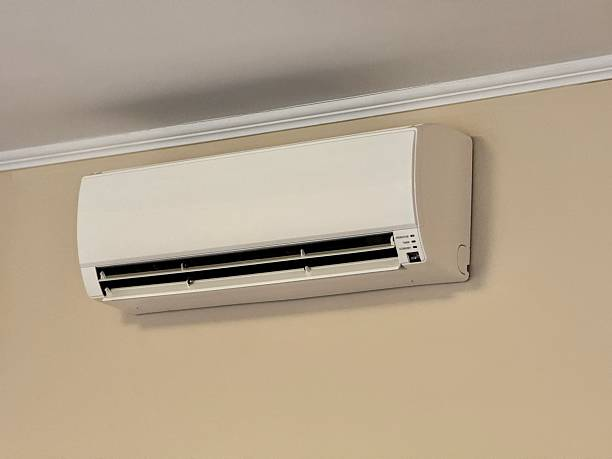
Ductless mini-split systems solve this by moving refrigerant directly to a wall or ceiling unit inside the room you want to cool. No ducts. No leaks. No conditioned air lost to a 130-degree attic.
5 Signs You Should Consider a Ductless AC System
Sign #1: Your Home Does Not Have Ductwork (or the Ducts Are Shot)
The clearest case for going ductless: you do not have ducts to work with, and installing them would cost more than the AC itself.
In a 1920s Haymount bungalow with plaster walls and no attic access, a full duct retrofit can run 10,000 to 25,000 dollars before you even buy the equipment. A ductless system skips that entirely. A single outdoor condenser runs slim refrigerant lines through a 3-inch hole in the wall, connects to one or more indoor units, and starts cooling the same day.
Even homes that do have ducts sometimes need to switch. If your ductwork is undersized, leaking at every joint, or buried in a crawl space that stays 90 degrees in July, you are paying to cool the crawl space more than the bedroom. Ductless side-steps the problem. Every BTU you pay for actually reaches the room.
For homeowners weighing more repairs on an old duct system against moving on to a ductless mini split installation, the second option usually wins on total cost over five years. Ductless equipment lasts 20-plus years with basic maintenance, and there is no ductwork to seal, insulate, or replace during that lifespan.
Sign #2: One Room Never Gets Cool No Matter What You Do
Every Fayetteville homeowner knows the room. Upstairs bonus room above the garage. Sunroom off the back. Master bedroom on the west side of the house that catches the full afternoon sun. The rest of the home feels fine. That one room sits at 82 degrees while the thermostat downstairs reads 74.
The fix people usually try: crank the whole system down two degrees. All that does is overcool the rest of the house, spike the power bill, and still leave the bonus room hot, because the duct run to that room is too long, too small, or too poorly insulated to push enough air.
A single-zone ductless head mounted in that room cools it independently. You leave the central system alone and target the actual problem. Most single-zone units cover 400 to 750 square feet, which handles almost any bedroom, bonus room, or converted attic space. Installation runs a day, sometimes half a day. The whole family stops fighting over the thermostat.
Sign #3: You Are Finishing a Bonus Room, Sunroom, or Garage Conversion
Additions and conversions are where ductless earns its reputation in Fayetteville. Sunrooms have glass on three walls and heat up fast.
Garage conversions have concrete floors that hold cold in winter and heat in summer. Bonus rooms over garages get baked from below and from the roof above. Extending the main system to any of these usually means tearing into finished walls, adding a return, upsizing the blower, and hoping the new load does not overwhelm the existing equipment.
Ductless makes this straightforward. Size the mini-split to the actual room load, mount it, run refrigerant lines, done. No trunk-line surgery. No blower upgrade. The addition stays comfortable on its own circuit, and the central system keeps handling the rest of the house.
The bonus: because ductless heads use inverter compressors that ramp up and down instead of cycling on and off, they hold a specific temperature and pull humidity down in the process. That matters in Fayetteville. Sunrooms with cheap window units tend to feel clammy even when the temperature reads right. A ductless head keeps the space dry.
Sign #4: Your Energy Bills Are Getting Worse Every Summer
Central AC systems installed before 2015 tend to sit in the 10 to 13 SEER range, which was the standard back then. Ductless mini-splits routinely hit 20 to 30 SEER2 today, and premium models like Carrier’s Infinity series reach 35 SEER2. According to Consumer Reports, the top-rated mini-splits pair inverter compressors with variable-speed indoor units, which use roughly 30 to 60 percent less energy than a comparable central AC system running the same load.
For a Fayetteville homeowner paying 300 dollars a month during peak summer, that is a real number. A mini-split retrofit for the two or three hottest rooms can shave 75 to 150 dollars per month off the summer bill while making those rooms genuinely comfortable for the first time.
The efficiency gap widens on part-load days too. A conventional central AC runs full blast, then shuts off, then runs full blast again. An inverter-driven ductless system throttles down and runs continuously at a low speed, which uses less electricity and holds a steadier temperature. If you have been calling around for ac repair on the same old system three summers in a row, that repair budget is often the down payment on the replacement that ends the cycle.
Sign #5: The Family Fights the Thermostat Every Night
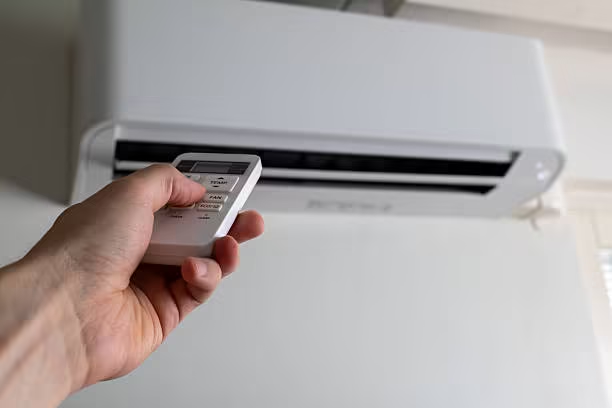
Multi-zone ductless systems let you cool four to five different rooms to different temperatures, all off one outdoor condenser. Master bedroom at 68 for sleeping. Kids’ rooms at 72. Living room at 74. Home office at 70. Each zone has its own remote and runs only when someone is using the room.
For a Fayetteville family that used to burn 350 dollars a month cooling the whole house to 72 because one person wanted it cold, that difference is the whole point. You stop overcooling three rooms nobody sits in just to get the fourth one right. You stop cooling empty bedrooms during the day. And you stop the nightly argument about the thermostat, because everyone controls their own room.
The other quiet benefit: multi-zone systems let you shut off cooling to the guest room, the formal dining room, or any space that gets used twice a month. That is a permanent reduction in your baseline cooling load and a permanent cut to your bill.
What Ductless Systems Actually Cost in Fayetteville
A single-zone ductless installation in Fayetteville typically runs 3,500 to 5,500 dollars installed, depending on the unit’s capacity and how far the refrigerant lines have to travel from the condenser to the indoor head. A two-zone system runs 6,500 to 9,000. A four-zone whole-home ductless setup that replaces an aging central system can land anywhere from 12,000 to 20,000 depending on the equipment tier and SEER2 rating you pick.
That is more expensive per zone than central air on a straight equipment basis. It is cheaper than tearing walls open to run ducts in an older home. And it moves faster: a full ductless install rarely takes more than two days, even in a 3,000-square-foot house.
Ongoing costs come down after year one. Ductless units do not have ducts to seal, filters to replace at every register, or blower motors under the same wear load. Annual maintenance is a filter cleaning and a coil check, usually 150 to 200 dollars per service visit.
North Carolina Rebates That Cut the Sticker Price
North Carolina rolled out its state rebate program in January 2025, and it applies to qualifying ductless heat pumps. According to the NC Department of Environmental Quality, the Home Electrification and Appliance Rebate (HEAR) program offers up to 8,000 dollars for an ENERGY STAR-certified electric heat pump for households earning under 80 percent of area median income. Moderate-income households (80 to 150 percent AMI) get partial rebates. Households above 150 percent AMI do not qualify for this specific rebate but can still use federal tax credits.
Duke Energy Progress’s Smart $aver program adds up to 500 dollars for qualifying HVAC replacements on top of the state rebate. The two stack.
The federal Energy Efficient Home Improvement Credit (25C) also gives homeowners a 30 percent tax credit up to 2,000 dollars per year on ENERGY STAR heat pumps, including qualifying mini-splits. That credit has no income cap.
The combined effect: a 5,000-dollar single-zone install can drop below 2,500 out of pocket for the right household. Ask your contractor which specific model numbers qualify for HEAR before you sign the estimate, because not every mini-split makes the ENERGY STAR list.
Fayetteville Permits and What the City Actually Requires
Skip this step and you will pay for it during resale. The City of Fayetteville Permitting and Inspections office requires a mechanical permit for every ductless installation, whether the system replaces existing equipment or goes into a room that never had cooling before. The Residential Mechanical Only application covers it, and it gets submitted through the city’s E-Development portal.
Two other things the city inspector will check that homeowners often miss:
- Refrigerant line penetrations. Any hole through the exterior wall for a line set has to be properly sleeved and sealed to prevent moisture intrusion. Humidity punishes anything less, and a bad seal turns into rot inside the wall cavity within a couple of seasons.
- Condensate handling. The 2018 North Carolina Residential Code requires ductless indoor units that produce condensate to have an inline check valve in the drain line or a trap. This is standard on a professional install and often skipped on DIY jobs.
Electrical work for the disconnect and dedicated circuit needs to be inspected under a separate electrical permit. A licensed HVAC contractor pulls both permits as part of the job and schedules the inspections.
You can reach the Fayetteville Inspection Department at (910) 433-1707 for questions on your specific address, or work with a contractor that handles the paperwork so you never have to think about it.
When a Central AC System Is Still the Right Call
Ductless does not win every scenario. Central air still makes more sense when:
- Your existing ductwork is in good shape and less than 15 years old. Sealing and rebalancing a working duct system costs less than switching platforms and gets you back to comfortable faster.
- You are cooling a large, open floor plan with one main living space. A central system handles open plans more evenly than a single ductless head can, and the head placement gets awkward in a great room with vaulted ceilings.
- You do not want visible indoor units on the wall or ceiling. Ductless heads are compact but visible, and some homeowners hate the look.
- You are building new. New construction can be designed around efficient central systems from the start without any of the retrofit compromises that push older homes toward ductless.
The right answer depends on the house, the ductwork’s condition, and how you actually use the space. For most Fayetteville homes built before 1970 or with chronic problem rooms, ductless wins. For newer homes with clean ductwork, sealing and upgrading the central system usually wins.
If your central system is on its last legs, get pricing on both options before you commit. It is worth the hour of comparison to avoid guessing wrong on a 15,000-dollar decision.
How to Decide on Ductless for Your Fayetteville Home
Start with the room that is making you consider this in the first place. Walk through the house, note every space where the temperature is off, and count them. One problem room means a single-zone install and probably fewer than 5,000 dollars out of pocket after rebates. Three or more problem rooms starts to justify a multi-zone system or a full ductless retrofit.
Then check your central system’s age. If it is under 12 years old and working, add ductless to handle the problem rooms and keep the central system for the rest of the house. If it is 15-plus years old and struggling, price a full ductless replacement against a new central system and factor in the 30-year total cost of ownership. The higher SEER2 rating on ductless usually wins that math even when the sticker price runs higher.
A/C Man Heating and Air handles both. Have a technician walk your home, measure the loads, and price out the specific installation for your address before you commit to anything. That visit is free. If you would rather get started than think about it any longer, call (910) 797-4287 or get in touch with the team to schedule the estimate.
FAQ
How long does a ductless mini-split installation take in Fayetteville?
A single-zone install typically takes 4 to 8 hours. Multi-zone systems with three or more indoor units usually run 1 to 2 days, depending on how far apart the rooms are and whether the electrical panel needs an upgrade to handle the added load.
Do I need a permit for a ductless AC system in Fayetteville?
Yes. The City of Fayetteville requires a mechanical permit for every ductless installation and a separate electrical permit for the dedicated circuit and disconnect. A licensed HVAC contractor pulls both permits as part of the installation and schedules the inspections with the city.
Can a ductless mini-split heat my house too, or does it only cool?
Modern ductless systems are heat pumps, which means they heat and cool. In Fayetteville’s mild winters, they run efficiently down to about 25°F without any auxiliary heat. Below that, most models switch to electric resistance backup, or you keep an existing furnace for the coldest overnight lows.
How loud is a ductless indoor unit?
Modern indoor heads run between 19 and 32 decibels on low, which is quieter than a whisper. On full speed they hit 40 to 45 decibels, roughly the sound of light rainfall. The outdoor condenser is louder, similar to a standard AC unit, and sits outside where you barely hear it from inside.
Are ductless systems worth it for a small 900-square-foot Fayetteville home?
Often yes. A single well-placed indoor unit can cool an entire small home with better efficiency than a small central system and no ductwork required. The install is faster, the equipment lasts longer, and the operating cost is lower. Get a load calculation from a licensed contractor to confirm sizing before you buy.
