
Why Under House Humidity Is Sabotaging Your AC
Your power bill keeps climbing, the upstairs feels sticky, and a faint musty smell hangs in the hallway. You blame the air conditioner. The real culprit is sitting in the dark space under your feet. Damp air in your crawlspace does not stay down there, and that hidden moisture quietly forces your AC to work harder every single day.
The Environmental Protection Agency estimates that homeowners save an average of 15 percent on heating and cooling costs by air sealing the spaces that leak conditioned air, and the crawlspace is one of the biggest offenders. Keep reading to see how the ground beneath your home is draining your system and your wallet.
Key takeaways:
- Damp crawlspace air rises into your living space through the stack effect, raising the moisture load on your AC.
- A higher moisture load makes your air conditioner run longer, work harder, and wear out sooner.
- Crawlspace humidity rusts coils, sweats ductwork, and feeds mold that rides your airflow indoors.
- Air sealing the home can cut heating and cooling costs by an average of 15 percent.
- Crawlspace encapsulation and a dehumidifier stop the moisture at the source and ease the load on your system.
How Does Under-House Humidity Sabotage Your AC?
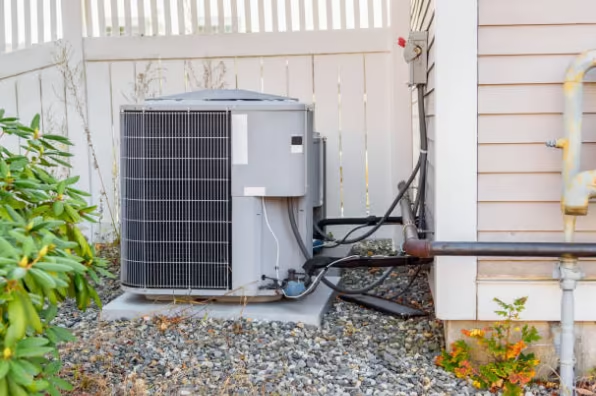
Under-house humidity sabotages your AC because damp crawlspace air rises into your home through the stack effect, raising the moisture load your system has to remove. Your air conditioner then runs longer and works harder to dry that air, which drives up energy bills and shortens equipment life. At the same time, the moisture corrodes coils, feeds mold, and leaks through ductwork.
Most homeowners never realize how much the crawlspace can affect the air inside the rest of the house. As air naturally moves throughout a home, moisture from the crawlspace can be drawn upward into the living areas. In fact, building science research has found that a significant portion of the air circulating on the first floor originates from the crawlspace.
When that crawlspace is damp, the moisture does not stay below the house. It moves into the rooms above, raising indoor humidity levels and making the air feel heavier. As a result, your air conditioner has to work harder to remove that excess moisture while also cooling the home, reducing comfort and increasing strain on the system.
The Ways Crawlspace Humidity Drags Down Your AC
Crawlspace moisture attacks your cooling system from several directions at once. Some effects hit your energy bill, others damage the equipment, and a few quietly hurt the air you breathe. Walking through them shows why a humidity problem under the house is really an AC problem.
1. The Stack Effect Pumps Damp Air Into Your Home
The stack effect is the engine behind the whole problem. As air leaks out of your attic and upper rooms, fresh air gets drawn up from the crawlspace to replace it, carrying every bit of that ground moisture with it.
Your living space ends up more humid than it should be, even with the AC running steadily. That extra moisture is exactly what your system has to wring out before your home feels comfortable, so the saboteur is feeding your AC more work around the clock.
2. Your AC Runs Longer and Works Harder
Removing humidity takes energy, and a damp crawlspace hands your system a constant moisture surplus. Your air conditioner has to run longer cycles to pull that water out of the air, which raises your electric bill and adds runtime hours to the equipment.
A system that should coast through a Fayetteville summer instead grinds away near its limit. Over time, those extra hours translate to more frequent repairs and a shorter overall lifespan for the unit.
3. Ductwork in the Crawlspace Sweats and Leaks
Many Fayetteville homes route their ductwork through the crawlspace, and that is a problem when the space stays humid. Cold supply ducts surrounded by warm, moist air sweat the same way a glass of ice water does, and that condensation soaks insulation and promotes rust.
Any gaps in the duct connections then pull humid crawlspace air directly into the airflow your AC just worked to cool and dry. You pay to condition air that leaks away while damp air sneaks in to replace it.
4. Moisture Corrodes Coils and Components
Standing humidity is hard on the metal parts of your cooling system. The evaporator coil, condensate pan, and electrical connections all sit in the path of that moist air, and constant dampness accelerates rust and corrosion. A corroded coil loses efficiency and can spring refrigerant leaks, while damaged electrical parts invite sudden failures. What starts as a crawlspace humidity issue can end as an expensive AC repair.
5. Mold and Musty Odors Ride Your Airflow
A humid crawlspace is an ideal home for mold, mildew, and dust mites. Through the stack effect, those spores and odors travel straight up into your living space and through your HVAC system. You notice it as a musty smell that returns no matter how often you clean, and it can aggravate allergies and asthma for everyone in the home. Your AC ends up circulating the very contaminants the moisture created.
6. Wet Insulation and Wood Rot Lower Efficiency
Crawlspace moisture does not stop at your equipment. It saturates insulation, which loses its thermal value when wet, so your floors feel warmer and your AC compensates by running more. Prolonged dampness also rots floor joists and subflooring, weakening the structure and opening the door to pests. Each of these problems quietly raises the load your cooling system has to carry.
How to Stop Under-House Humidity From Wrecking Your AC
The fix is to stop the moisture at its source rather than asking your AC to battle it forever. Crawlspace encapsulation seals the space with a heavy vapor barrier, closes off outside vents, and locks out ground moisture and humid outdoor air. Pairing that with a dedicated crawlspace dehumidifier keeps the area dry year round, which is the single most effective step in a humid climate like North Carolina.
From there, sealing and insulating the ductwork stops condensation and air leakage, and fixing any drainage or grading issues keeps water away from the foundation. Once the crawlspace stays dry, your AC finally gets to do the job it was sized for, and you feel the difference in both comfort and energy bills.
When to Call an HVAC Professional in Fayetteville
Call a professional when you notice a persistent musty smell, indoor humidity that stays above 50 percent, sweating or rusted ductwork, rising energy bills, or visible mold and standing water in the crawlspace. Those are signs the moisture problem has already reached your HVAC system and your living space.
This is where A/C Man Heating and Air comes in. Our certified technicians inspect the crawlspace, ductwork, evaporator coil, and indoor humidity together, so you get the full picture instead of a quick patch.
We handle crawlspace encapsulation and same day air conditioning repair across Fayetteville, which means one team can stop the moisture at its source and restore your system in a single coordinated visit. A/C Man Heating and Air is a veteran owned company with 817 {4.9}-star Google reviews from local homeowners, and every job is backed by guaranteed workmanship.
A Real Fayetteville Crawlspace and AC Fix
A homeowner in the Cottonade neighborhood off Cliffdale Road called A/C Man Heating and Air about a stuffy upstairs, a musty odor that would not quit, and a cooling bill that kept creeping higher each month. The air conditioner ran constantly, yet the house never felt truly dry.
Our technician checked the crawlspace first and found the real story. The vented space held high humidity, the supply ducts were sweating and rusting, and a layer of mold had taken hold on the insulation. We encapsulated the crawlspace with a sealed vapor barrier, added a dehumidifier, sealed and insulated the leaking ducts, and confirmed the AC was charged and operating correctly.
Within a couple of weeks the indoor humidity settled into a comfortable range, the musty smell disappeared, and the system stopped running around the clock. It is a clear example of how a problem hiding under the floor can masquerade as a failing air conditioner.
Protecting Your AC by Drying Out the Space Below
The pattern is easy to miss because the cause is out of sight. When your home feels humid, your bills climb, and your AC never seems to rest, the trouble often starts in a damp crawlspace rather than the equipment itself. Sealing that moisture out with encapsulation, a dehumidifier, and tight ductwork takes the hidden load off your system and lets it cool your home the way it was designed to.
If a musty, sticky home and a hard working AC sound familiar, let A/C Man Heating and Air track the problem to its source. Call us at (910) 841-2106 or schedule your service online, and our team will dry out the space below and get your air conditioner back to running cool, efficient, and strong.
FAQs
Can crawlspace humidity really affect my air conditioner?
Yes. Through the stack effect, damp crawlspace air rises into your living space and raises the moisture load your AC must remove. That makes the system run longer, raises energy bills, and corrodes coils and ductwork over time, shortening its lifespan.
What is the ideal humidity level for a crawlspace?
A healthy crawlspace generally stays below 60 percent relative humidity, and sealed, encapsulated spaces often hold closer to 50 percent. Above that range, mold, wood rot, and condensation on ductwork become likely, and that moisture works its way up into your home.
Does crawlspace encapsulation lower cooling bills?
It often does. The EPA estimates air sealing a home saves an average of 15 percent on heating and cooling costs, and a sealed crawlspace reduces the moisture load your AC fights daily. Many homeowners also see less runtime and fewer repairs afterward.
Why does my house smell musty even with the AC running?
A musty smell usually means mold or mildew is growing somewhere damp, often the crawlspace. The stack effect carries those odors and spores up into your living space and through your HVAC system, so the smell returns no matter how often you clean.
Should I fix the crawlspace or replace my AC first?
Start with a professional inspection of both. If your crawlspace is damp, sealing it and adding a dehumidifier may resolve the comfort and humidity problems without a new AC. Replacing the unit alone rarely helps when moisture keeps feeding the system.
